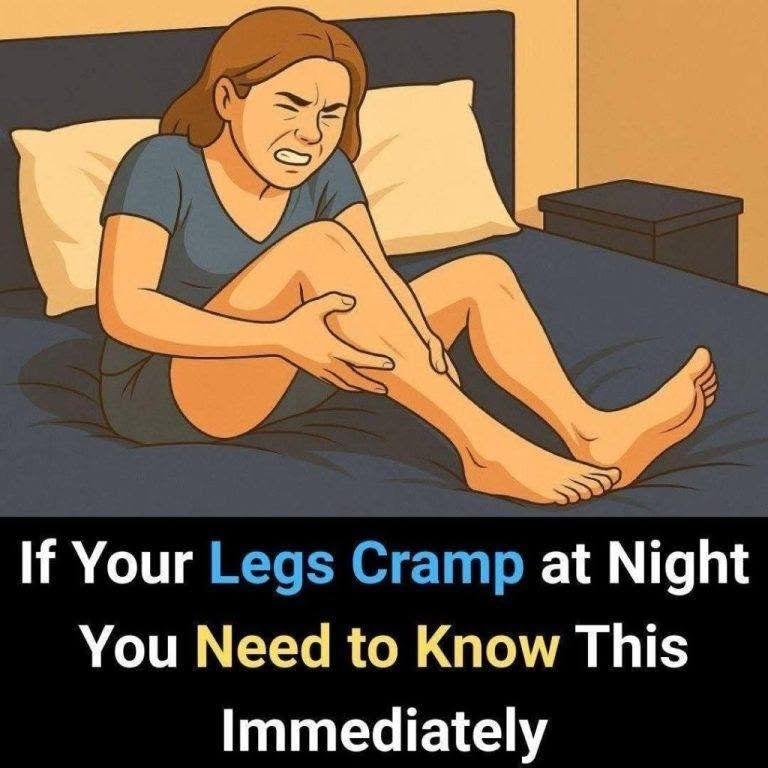
🦵 If Your Legs Cramp at Night, Here’s What You Should Know
Nighttime leg cramps are sudden, involuntary tightening of a muscle—most often the calf, foot, or thigh. They’re common, especially with increasing age, and usually aren’t dangerous.
What to do immediately when a cramp starts
-
Stretch the cramped muscle gently. For a calf cramp, straighten your leg and slowly pull your toes toward your face.
-
Stand and walk carefully if you’re able to do so safely.
-
Massage the muscle gently until it relaxes.
-
Apply warmth with a warm shower or heating pad to help the muscle relax.
Why do nighttime cramps happen?
Sometimes there’s no identifiable cause. They can be associated with:
-
Muscle fatigue or prolonged physical activity
-
Sitting or standing in one position for a long time
-
Dehydration
-
Pregnancy
-
Certain medications
-
Nerve or circulation problems
-
Some medical conditions
It’s a common internet claim that nighttime cramps automatically mean you’re deficient in magnesium or potassium. That’s not necessarily true. Don’t start high-dose mineral supplements without medical advice, particularly if you have kidney problems or take medications.
When should you see a doctor?
Arrange a medical evaluation if cramps are frequent, severe, persistent, or regularly interrupt your sleep, or if you also experience weakness, numbness, or swelling.
🚨 Get urgent medical attention if one leg suddenly becomes swollen, red, warm, and painful, especially if you develop chest pain or shortness of breath. That pattern can indicate a blood clot rather than an ordinary muscle cramp.
For occasional cramps, gentle stretching, regular movement, and adequate hydration are generally reasonable first steps.