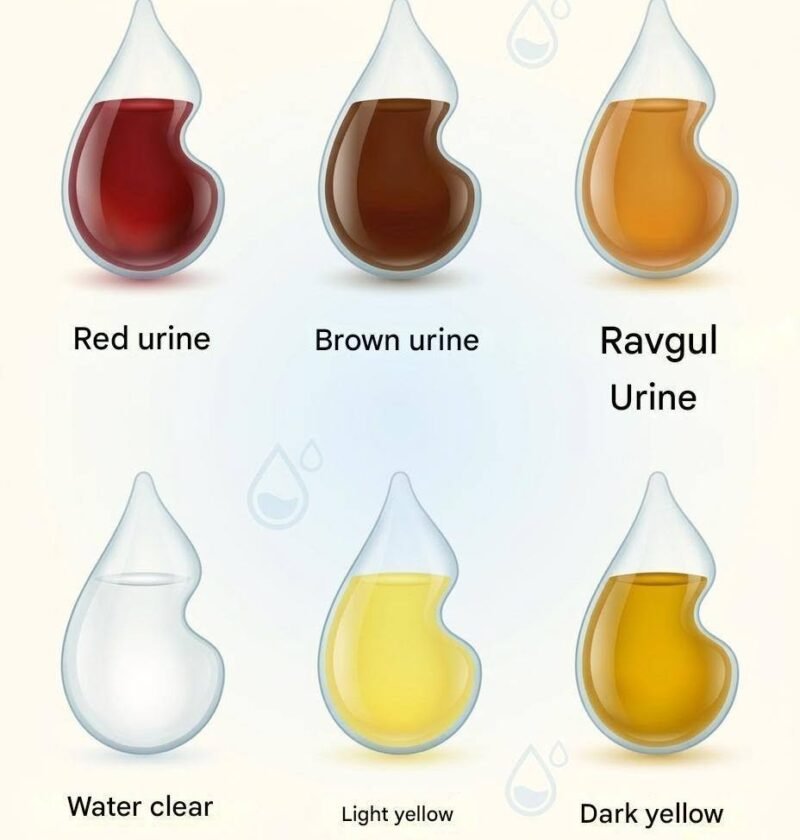
Urine color can provide useful clues about hydration, but it cannot diagnose a disease by itself. Foods, medicines, vitamins, and some medical conditions can also change urine color.
🟨 What different colors can mean
- Pale yellow: Usually a sign of adequate hydration.
- Dark yellow/amber: Often means your urine is concentrated and you may need more fluids.
- Completely clear: You may be drinking more water than you need. Constantly forcing large amounts of water isn’t necessary.
- Orange: Can occur with dehydration or certain medicines. Persistent orange urine deserves medical advice.
- Pink or red: Can result from foods such as beetroot, but it can also indicate blood in the urine. If you can’t clearly explain the color from something you ate or a medicine, get it checked.
- Brown or tea-colored: Can occur with significant dehydration, some medicines, liver problems, or muscle injury and should be medically evaluated if persistent.
- Blue or green: Uncommon; certain medicines, dyes, or infections can cause this.
- Cloudy or milky: May occur with dehydration or crystals, but can also be associated with a urinary infection or other urinary problems.
🟢 A useful rule
For most healthy adults, pale yellow urine is generally a reasonable sign that you’re hydrated. Don’t use urine color alone to decide that you need to drink huge amounts of water.
🚨 When to seek medical advice
Get checked if you notice persistent blood/red urine, dark brown urine, cloudy urine with pain or fever, unusually little urine, or a major unexplained change in urine color. (nhs.uk)
Also seek urgent care if urine changes occur together with severe pain, fever, vomiting, confusion, or significant difficulty urinating.
Bottom line: Urine color is best viewed as a clue, not a diagnosis. Hydration is one of the most common explanations, but persistent unusual colors should be evaluated rather than treated with home remedies.