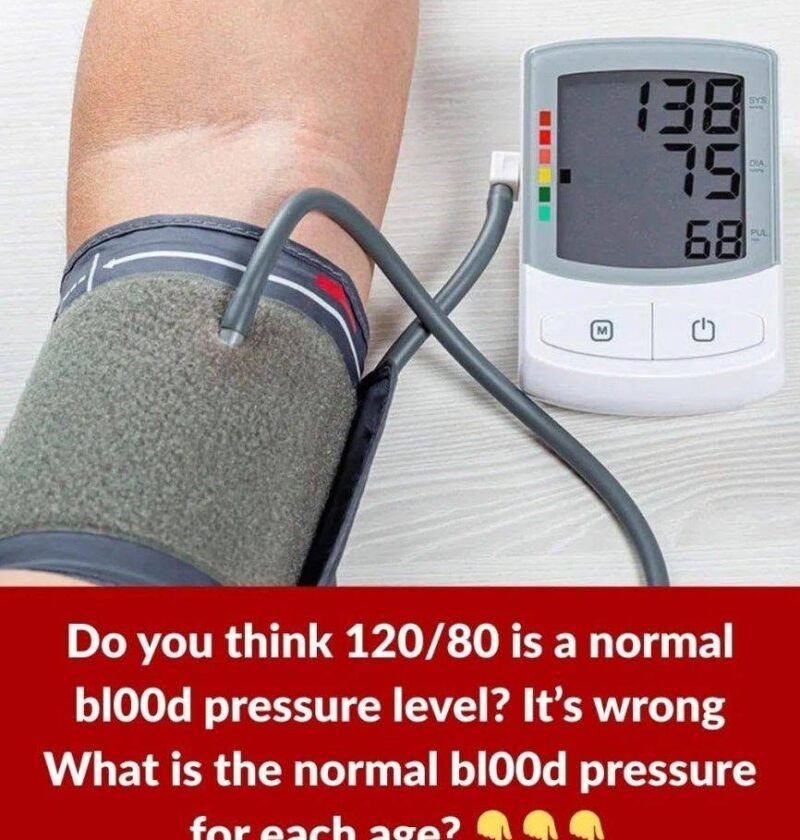
Normal Blood Pressure by Age
There isn’t a single blood-pressure number that is “normal” for every age. In adults, the same general thresholds are used regardless of whether someone is 40, 60, or 80. Blood pressure also varies with activity, stress, medications, and measurement technique.
Adults
| Age | Generally desirable reading |
|---|---|
| 18–39 | Around <120/80 mmHg |
| 40–59 | Around <120/80 mmHg |
| 60–79 | Around <120/80 mmHg, when tolerated |
| 80+ | Individual target may differ; treatment goals should be decided with a clinician |
A reading of 120–129 systolic with diastolic <80 is considered elevated in the American Heart Association classification. 130/80 or higher falls into a hypertension category, although diagnosis should be based on repeated measurements rather than one reading.
For children
Blood pressure is different: normal values depend on age, sex, and height, so adult cutoffs shouldn’t simply be applied to children.
When it’s an emergency
A blood pressure of ≥180/120 mmHg is severely elevated. If it occurs with chest pain, shortness of breath, weakness/numbness, vision changes, confusion, or difficulty speaking, seek emergency medical care immediately.
For an accurate home reading, sit quietly for about 5 minutes, keep your feet flat on the floor, support your arm at heart level, and take two readings about a minute apart.