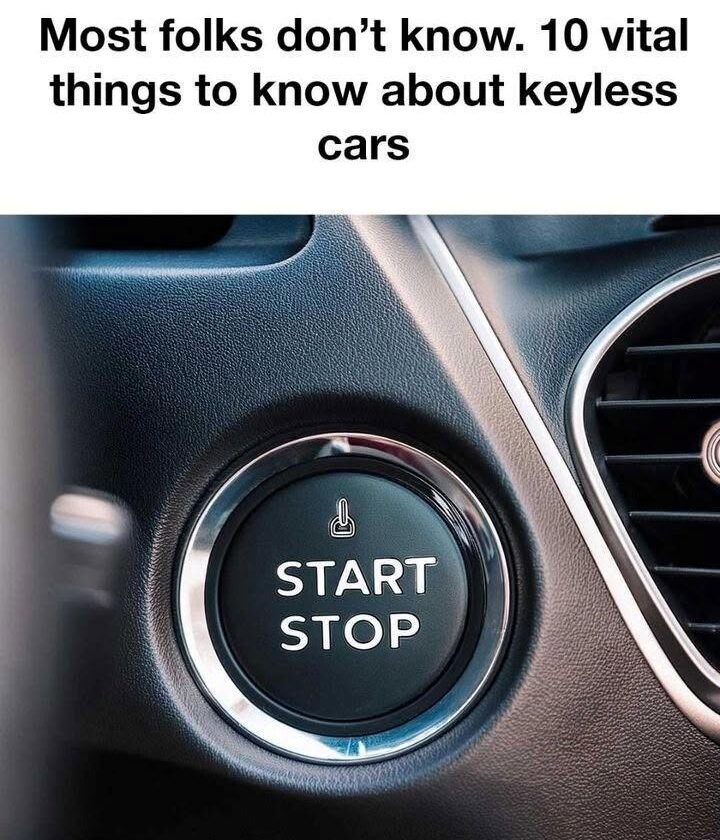
If you mean cars with keyless entry and push-button ignition, here are 10 important things to know:
-
The engine can start without inserting a key.
The car detects the electronic key/fob nearby, allowing you to start it with the button. -
The key fob battery can die.
Most vehicles have a backup procedure—often a hidden mechanical key for the door and a designated spot where you can place the fob to start the car. -
Don’t assume “key not detected” means the car has stopped.
If the engine is already running, losing the fob’s signal generally doesn’t immediately shut the engine off. The vehicle may continue running until switched off. -
You can accidentally leave the engine running.
A push-button car may remain running after you leave it, depending on the vehicle. Always check that the engine is actually off before walking away. -
Keyless theft is a real concern.
Some systems can be vulnerable to relay attacks, in which criminals extend the signal between a key fob and the vehicle. -
Protect your key fob.
Keep it away from doors/windows when possible. A properly designed Faraday pouch can reduce radio-signal transmission, although its effectiveness depends on the product and vehicle. -
The steering wheel lock and transmission still matter.
Push-button ignition doesn’t replace basic security practices. Put the transmission in Park, engage the parking brake when appropriate, and lock the vehicle. -
The brake pedal is usually required to start the car.
Automatic vehicles commonly require you to press the brake while pressing the start button. Follow your vehicle’s manual because systems differ. -
Don’t keep the fob in the car.
Some vehicles won’t allow normal locking when the key is inside, but you shouldn’t rely on that safeguard. -
Learn your car’s emergency procedures.
Read the owner’s manual to find the backup starting position, mechanical key release, emergency shutdown procedure, and replacement-key process. These vary considerably between manufacturers.
One particularly important safety point: never leave a keyless vehicle running in an enclosed garage. Carbon monoxide can build up even when the garage door is open.