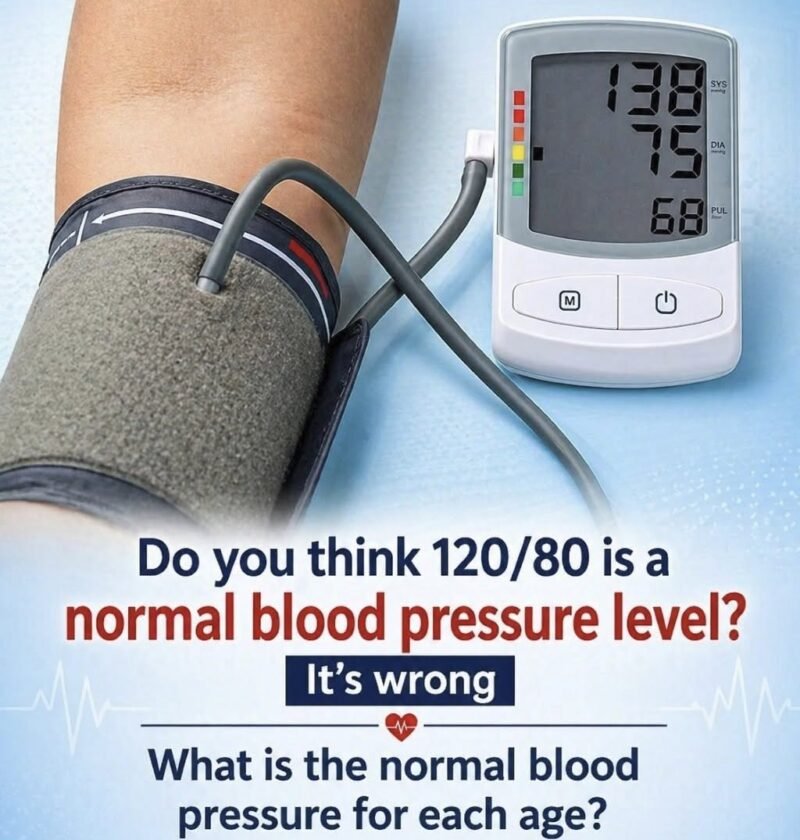
What Is Normal Blood Pressure for Your Age? A Clear, Updated Guide
Blood pressure is one of the most important measurements of cardiovascular health. It tells us how strongly blood is pressing against the walls of your arteries as your heart pumps and relaxes.
You may have heard that blood pressure naturally “should” be higher as you get older. While blood pressure often increases with age, that does not mean that a higher reading automatically becomes normal.
For most adults, current guidelines define normal blood pressure as less than 120/80 mm Hg. The same basic adult categories are used regardless of whether someone is in their 20s, 40s, 60s or 80s.
So what should your blood pressure be at different ages? Here’s a clearer way to understand the numbers.
Understanding the Two Blood Pressure Numbers
A blood-pressure reading contains two numbers, such as 118/76 mm Hg.
Systolic pressure — the top number
The systolic number measures the pressure in your arteries when your heart contracts and pumps blood.
Diastolic pressure — the bottom number
The diastolic number measures the pressure in your arteries between heartbeats, when the heart is filling with blood.
Both numbers matter.
For example:
118/76 is in the normal range.
135/85 is not considered normal because either the systolic or diastolic value can place a reading into a higher category.
Normal Blood Pressure for Adults
According to current adult blood-pressure categories:
| Category | Systolic | Diastolic |
|---|---|---|
| Normal | Less than 120 | Less than 80 |
| Elevated | 120–129 | Less than 80 |
| Stage 1 hypertension | 130–139 | 80–89 |
| Stage 2 hypertension | 140 or higher | 90 or higher |
| Severely high | Higher than 180 | and/or higher than 120 |
The category is determined by whichever number places the reading in the higher category.
What Is Normal at Age 20?
A healthy 20-year-old generally uses the same adult reference categories.
A reading below 120/80 mm Hg is considered normal.
For example:
- 110/70 — normal
- 116/75 — normal
- 119/79 — normal
- 125/78 — elevated
Being young does not completely protect you from high blood pressure. Genetics, excess weight, kidney disease, certain medications, diet, stress and other factors can contribute to elevated blood pressure.
What Is Normal at Age 30?
The adult target remains the same.
A reading below 120/80 mm Hg is considered normal.
If your readings are repeatedly in the 130s or higher, or your diastolic pressure repeatedly reaches 80 or above, it is worth discussing the results with a healthcare professional. A single elevated reading does not necessarily establish a diagnosi