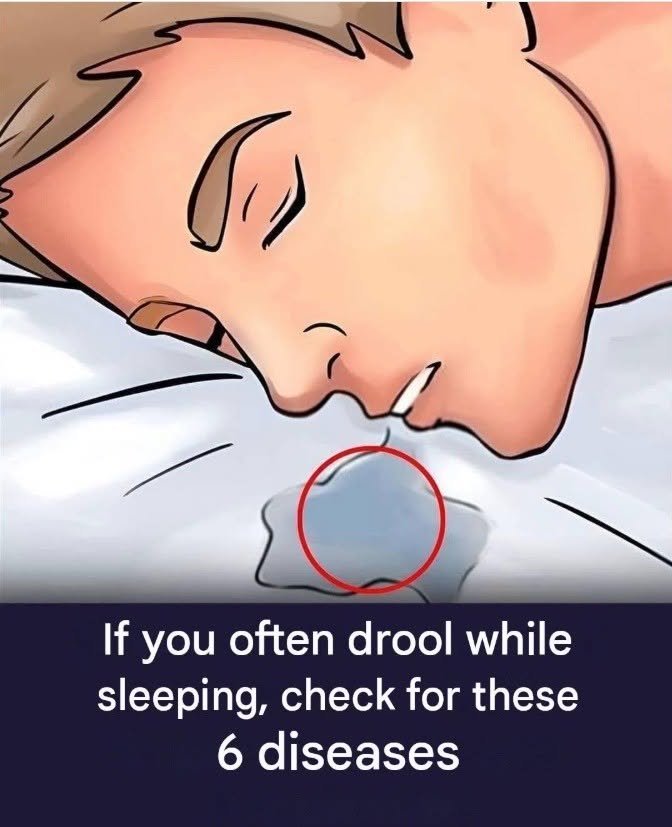
If you mean drooling or saliva leaking from your mouth while you’re asleep, it’s usually not a sign of something serious. It happens when saliva accumulates and leaks out because swallowing becomes less frequent during sleep.
Why does it happen?
Common reasons include:
- Sleeping on your side or stomach — gravity makes saliva more likely to escape.
- Nasal congestion — a blocked nose can make you breathe through your mouth.
- Allergies or a cold — increased congestion and saliva can contribute.
- Acid reflux — can sometimes increase saliva production.
- Certain medications — some medicines can increase salivation.
- Sleep apnea — nighttime drooling can occur alongside mouth breathing and disrupted sleep.
- Difficulty swallowing or neurological conditions — less commonly, excessive drooling can be related to problems controlling swallowing.
How can you reduce it?
Treating nasal congestion, sleeping with your head slightly elevated, and addressing allergies or reflux may help. If you regularly wake with a very dry mouth, loud snoring, gasping/choking during sleep, morning headaches, or significant daytime sleepiness, consider discussing possible sleep apnea with a healthcare professional.
When is it worth getting checked?
Occasional drooling is usually harmless. But new or suddenly excessive drooling, especially with difficulty swallowing, facial weakness, speech changes, choking, or other neurological symptoms, needs prompt medical attention.
So if your mouth “runs” at night occasionally, it is generally just a consequence of sleep position, mouth breathing, and normal changes in swallowing during sleep—not a mysterious toxin leaving your body or a guaranteed sign of disease.