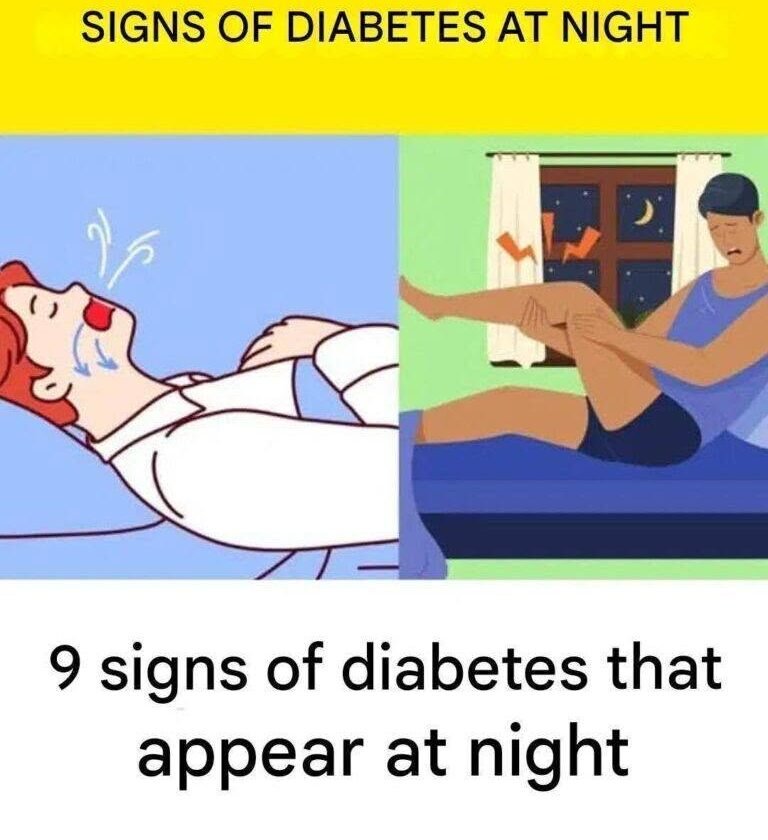
Yes, diabetes can produce symptoms that become more noticeable at night, but there is no special set of nine nighttime symptoms that can diagnose diabetes. Many of these signs have other causes.
9 nighttime signs that can occur with diabetes
- Waking frequently to urinate — high blood glucose can cause the kidneys to excrete extra glucose and water.
- Excessive thirst — often follows increased urination and fluid loss.
- Night sweats — particularly in someone taking insulin or certain diabetes medicines, because low blood glucose can cause sweating.
- Shaking, racing heartbeat, or hunger at night — possible symptoms of hypoglycemia.
- Restless or poor-quality sleep — high or low glucose, frequent urination, or other diabetes-related symptoms can interfere with sleep.
- Tingling, burning, or pain in the feet — diabetic peripheral neuropathy can become more noticeable when you’re resting at night.
- Leg cramps — may occur for many reasons and aren’t specific to diabetes.
- Dry mouth — can occur with dehydration from high blood glucose, although medications and other conditions are common causes.
- Persistent itching or recurrent infections — diabetes can increase susceptibility to certain skin or genital infections.
The important part
These symptoms don’t mean you have diabetes. The only way to establish whether your blood glucose is elevated is through appropriate testing, such as an A1C or blood-glucose test.
If you’re repeatedly waking to urinate, extremely thirsty, losing weight without trying, experiencing blurred vision, or having recurrent infections, it’s sensible to arrange a medical check rather than relying on a symptom list.
And if you’re taking diabetes medication and experience confusion, severe weakness, seizures, or loss of consciousness, treat this as an emergency because dangerously low blood glucose can be life-threatening.