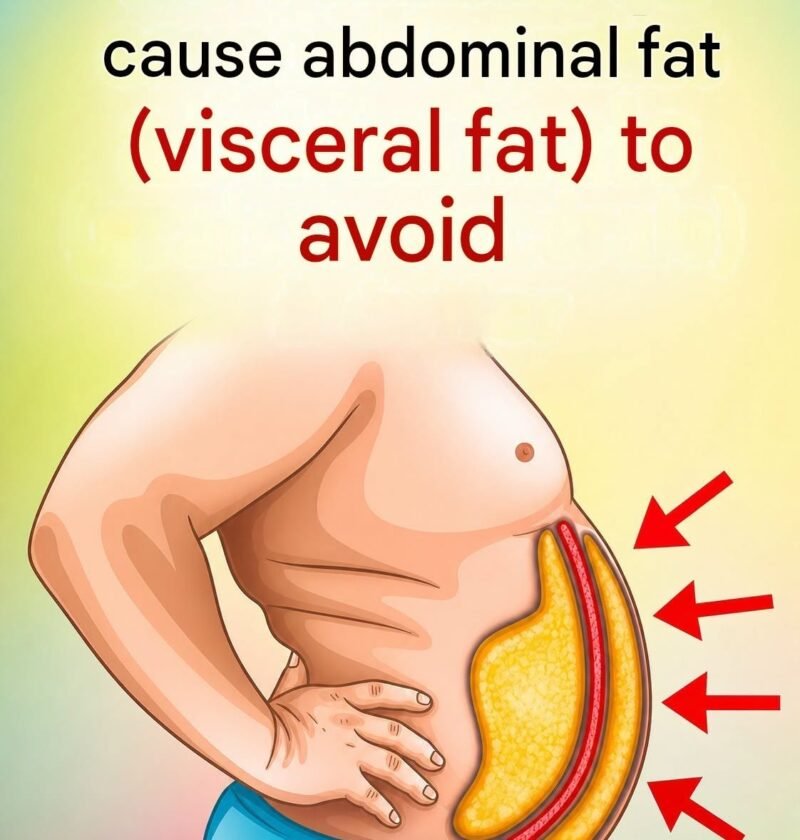
If you mean
foods that are strongly associated with gaining abdominal/visceral fat, there isn’t a single food that specifically “causes” visceral fat. Overall calorie surplus, diet quality, physical activity, sleep, genetics, and alcohol
intake all matter.
Six categories worth limiting are:
- Sugary drinks — soda, sweetened juices, energy drinks, and sweet tea can add lots of calories without much fullness.
- Refined carbohydrates — white bread, pastries, biscuits, and many highly refined snacks can make it easier to overconsume calories.
- Added-sugar foods — sweets, cakes, donuts, candy, and desserts are calorie-dense and easy to overeat.
- Processed meats — sausages, hot dogs, salami, and similar meats are best eaten sparingly.
- Deep-fried fast foods — fries, fried chicken, pakoras, and similar foods can be very calorie-dense.
- Alcohol — particularly frequent or heavy drinking, which can contribute substantially to abdominal fat and excess calorie intake.
The bigger takeaway: You don’t need to completely eliminate these foods. For reducing visceral fat, focus on a sustainable calorie deficit, plenty of vegetables and fiber, adequate protein, minimally processed foods, regular exercise (especially resistance training plus aerobic activity), and limiting alcohol and sugary drinks.