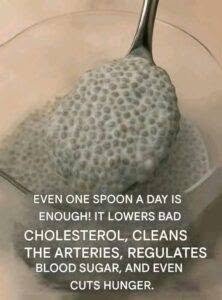
That sounds like a typical “one spoon a day” health claim, but the wording is much stronger than the evidence supports.
If the ingredient being promoted is a food such as olive oil, chia seeds, flaxseed, or another high-fiber/fat food, a small daily amount can be part of a healthy diet—but no single spoonful literally “cleans” blocked arteries.
What is realistic?
- Cholesterol: Some foods containing unsaturated fats or soluble fiber can help improve LDL (“bad”) cholesterol when they replace saturated fats or less-healthy foods.
- Blood sugar: Fiber-rich foods can slow digestion and reduce blood-sugar spikes, but they don’t “regulate” diabetes by themselves.
- Hunger: Protein, fiber, and healthy fats can increase fullness, but the effect varies considerably.
- Arteries: Diet can reduce cardiovascular risk over time, but existing arterial plaque isn’t simply washed away by a particular food.
- Weight: A spoonful isn’t a magic weight-loss treatment. Overall calorie intake, diet quality, physical activity, sleep, and medical conditions matter.
If you tell me what the “one spoonful” is supposed to be (for example, olive oil, flaxseed, chia seeds, honey, or something else), I can explain exactly what one tablespoon a day can—and cannot—do for cholesterol, blood sugar, arteries, and appetite.