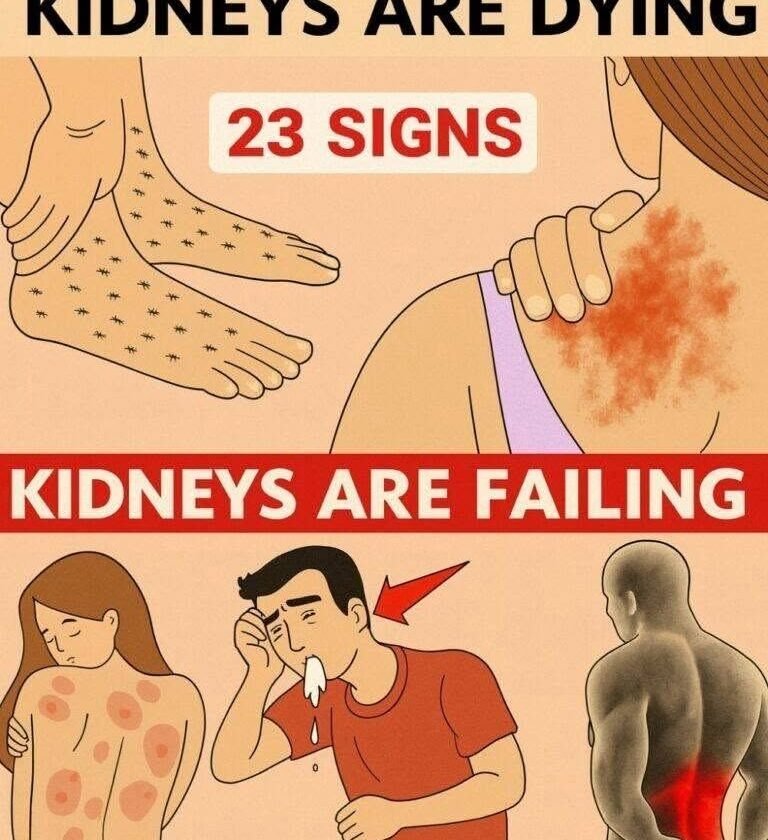
🩺 23 Signs That May Point to Kidney Problems
Kidney disease can be silent for years, so many people don’t notice symptoms until kidney function has already declined. These signs are not specific to kidney disease, but persistent or unexplained changes deserve medical attention.
- Foamy or unusually bubbly urine — can occur when excess protein is leaking into urine.
- Blood in the urine — urine may appear pink, red, or cola-colored.
- Urinating more often, particularly at night.
- Changes in how much urine you produce.
- Swelling in the ankles, feet, hands, or around the eyes from fluid retention.
- Persistent fatigue or weakness — advanced kidney disease can cause anemia.
- Trouble concentrating or feeling unusually foggy.
- Poor appetite.
- Nausea or vomiting.
- Unexplained weight loss.
- Dry, itchy skin.
- Muscle cramps or weakness caused by mineral/electrolyte disturbances.
- Shortness of breath, particularly when fluid accumulates or anemia is significant.
- High blood pressure that is difficult to control.
- Puffy eyes, especially in the morning.
- Bad or metallic taste in the mouth.
- Ammonia-like breath odor in advanced kidney failure.
- Sleep problems.
- Restless or uncomfortable legs.
- Headaches or dizziness, which can occur with anemia or blood-pressure problems.
- Back or side pain — particularly with kidney stones or infection, although chronic kidney disease itself usually doesn’t cause pain.
- Persistent itching without an obvious skin cause.
- Changes in skin color or pallor in advanced disease.
⚠️ An important distinction
Having one of these symptoms doesn’t mean your kidneys are failing. Many have much more common explanations. Conversely, someone can have significant chronic kidney disease without any symptoms at all.
The most useful way to check kidney health is through blood and urine testing—typically estimated glomerular filtration rate (eGFR) from a blood test and urine albumin testing.
If you have diabetes, high blood pressure, cardiovascular disease, or a family history of kidney disease, regular kidney-function testing is particularly important.
Seek urgent medical care for very little or no urine, severe shortness of breath, confusion, severe weakness, or blood in the urine accompanied by significant pain or illness.
Bottom line: Don’t rely on a list of “strange signs” to diagnose kidney disease. Foamy/bloody urine, persistent swelling, major changes in urination, and abnormal blood pressure are worth getting checked—but blood and urine tests are far more reliable than symptoms alone.