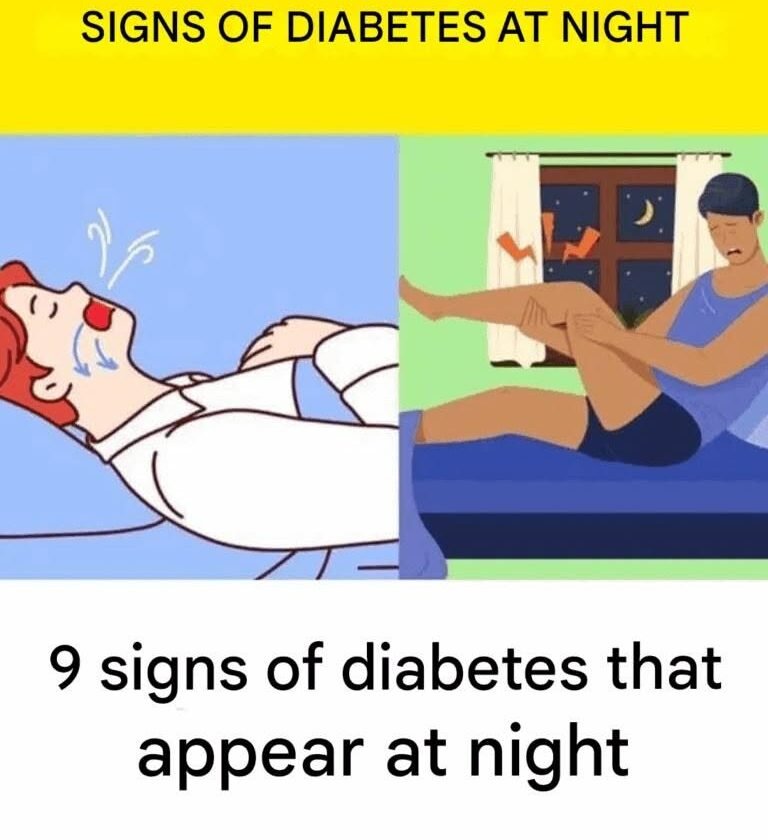
9 Signs of Diabetes That May Be More Noticeable at Night
Diabetes doesn’t have a unique set of symptoms that only occurs at night. However, high blood sugar can cause symptoms that become especially noticeable during the evening or overnight.
- Frequent nighttime urination — excess glucose can cause the kidneys to produce more urine.
- Strong thirst or a dry mouth — increased urination can contribute to dehydration.
- Night sweats — particularly in someone taking insulin or certain diabetes medications, nighttime sweating can occur when blood sugar drops too low.
- Restless or disrupted sleep — fluctuations in blood glucose can interfere with sleep.
- Tingling or burning feet — diabetic nerve damage (neuropathy) can cause symptoms that are particularly noticeable at night.
- Leg cramps or unusual discomfort — these can have many causes and aren’t specific to diabetes.
- Increased hunger — persistent high blood glucose can leave glucose unavailable to cells, sometimes causing increased hunger.
- Blurred vision — changing glucose levels can temporarily affect the eye’s focusing ability.
- Slow-healing cuts or recurrent infections — these aren’t necessarily nighttime symptoms, but may become more noticeable when checking the body before bed.
When to get checked
If you repeatedly wake to urinate, are unusually thirsty, have unexplained weight loss, persistent fatigue, recurrent infections, or have risk factors for diabetes, ask a healthcare professional about a blood glucose test or HbA1c test.
And if you’re taking insulin or medications that can cause low blood sugar, night sweats, shaking, confusion, nightmares, or a racing heartbeat can indicate hypoglycemia and should be discussed with your healthcare team.
Important: None of these symptoms alone proves that you have diabetes. Nighttime urination, dry mouth, cramps, and poor sleep have many other possible causes.