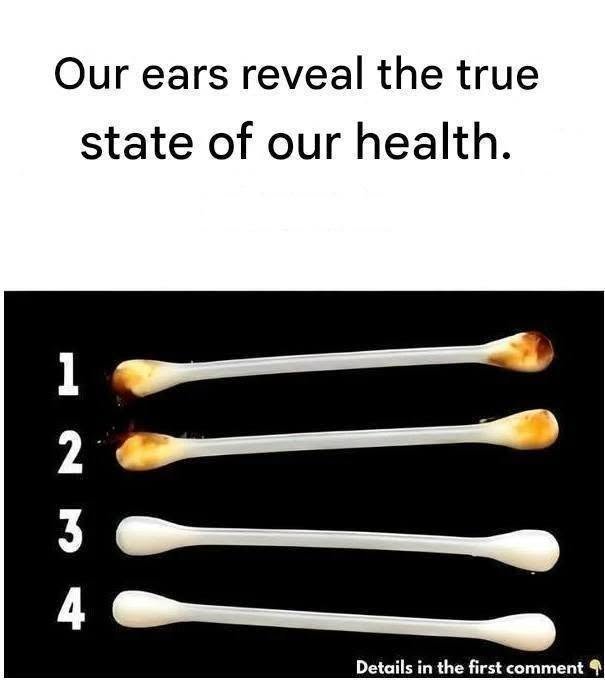
👂 What Your Ears Can Tell You About Your Health
Your ears can provide useful clues about your health, but they aren’t a diagnostic “map” of the body. Changes in hearing, balance, or the ear itself can sometimes point to problems that deserve medical attention.
1. Gradual hearing loss
Difficulty understanding conversations—especially in noisy places—can be a sign of age-related hearing loss. High blood pressure, diabetes, long-term noise exposure, and certain medications can also be associated with hearing problems. NIDCD+1
2. Ringing or buzzing
Tinnitus can occur after exposure to loud sounds and can accompany hearing loss. Persistent tinnitus, particularly when it’s only in one ear, should be evaluated. NIDCD+1
3. Sudden hearing loss 🚨
This is one ear symptom you should never ignore. Sudden sensorineural hearing loss can develop over hours or a few days and may be accompanied by ear fullness, ringing, or dizziness. NIDCD considers sudden deafness a medical emergency, because delaying treatment can reduce the chance of recovery. NIDCD
4. Dizziness or balance problems
Your inner ear contains structures involved in maintaining balance. Recurrent vertigo, particularly when accompanied by hearing changes, warrants medical evaluation. NIDCD
5. Ear pain, discharge, or bleeding
Pain, pus, fluid, or blood coming from the ear isn’t something to diagnose from appearance alone. These symptoms can result from infections, injury, or other ear problems and may require examination. NIDCD
6. Trouble hearing speech
If you frequently ask people to repeat themselves, need unusually high TV volume, or struggle to follow conversations, consider a hearing test rather than assuming it’s simply normal aging. NIDCD+1
What about ear-lobe creases or ear hair?
You’ve probably seen claims that an ear-lobe crease or lots of ear hair means you have heart disease. These features aren’t reliable diagnostic tests for cardiovascular disease. Don’t use the appearance of your ears to determine your heart health.
Protect your ears
Avoid prolonged exposure to loud sounds, lower headphone volume, and use appropriate hearing protection around very loud equipment. Noise-induced hearing loss can be permanent, but it is largely preventable. NIDCD+1
Bottom line: Your ears can reveal important information about hearing, balance, infections, and neurological or inner-ear problems, but viral claims often exaggerate what ear appearance can tell you. Sudden hearing loss, especially in one ear, deserves urgent medical attention.
Sources