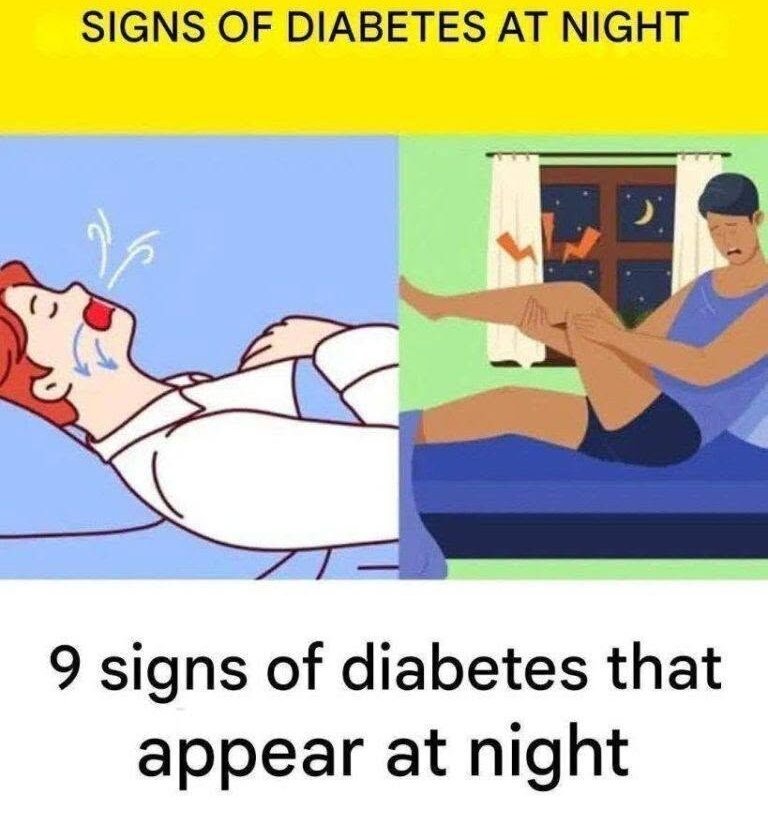
Here are 9 possible signs of diabetes that may become more noticeable at night:
- Frequent nighttime urination — High blood sugar can cause the kidneys to excrete extra glucose, pulling more water into the urine.
- Excessive thirst — Fluid loss from frequent urination can leave you unusually thirsty.
- Night sweats — Blood-sugar fluctuations, particularly low blood sugar in people using certain diabetes medications, can cause sweating during sleep.
- Restless or disrupted sleep — Thirst, urination, sweating, or blood-sugar changes can repeatedly wake you.
- Increased hunger — Some people with diabetes experience persistent hunger even after eating because glucose isn’t being used effectively by cells.
- Dry mouth — Dehydration related to elevated blood glucose can contribute to a dry mouth at night.
- Itchy or dry skin — High blood sugar and dehydration can contribute to dry, itchy skin.
- Tingling or burning feet — Diabetes-related nerve damage can cause sensations that are particularly bothersome when you’re resting at night.
- Blurred vision — Blood-glucose changes can temporarily affect the shape of the eye’s lens, sometimes making vision seem blurry