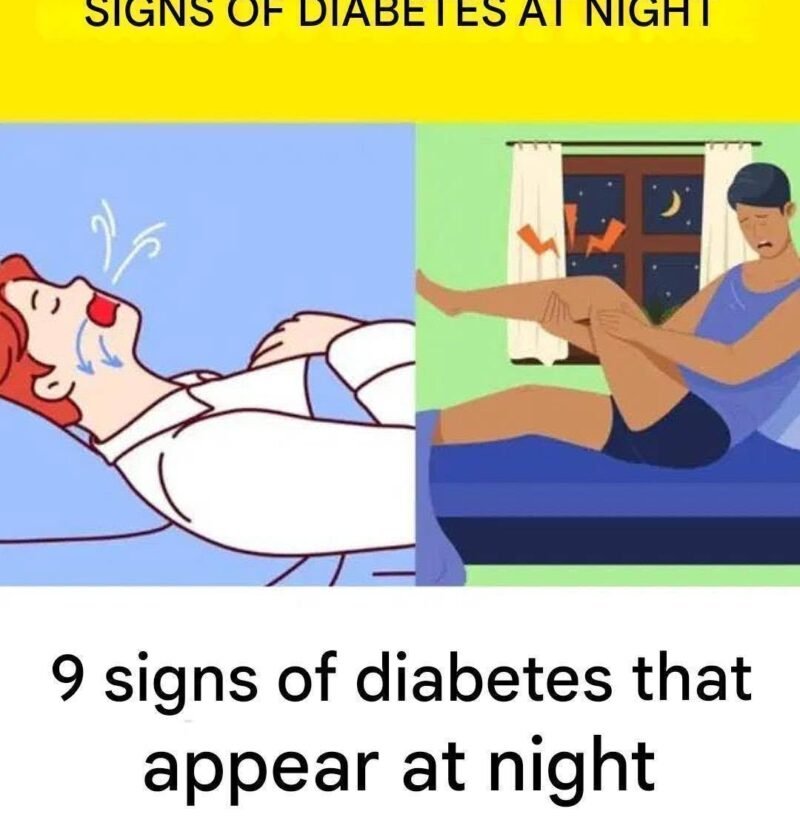
9 Signs of Diabetes That May Be More Noticeable at Night
Diabetes doesn’t have a unique set of “nighttime symptoms,” but some signs can become especially noticeable overnight or when you wake up. Having one of these symptoms does not mean you have diabetes.
-
Frequent nighttime urination — High blood glucose can cause the kidneys to excrete more glucose and water, increasing urination.
-
Strong thirst at night — Increased urination can contribute to dehydration and persistent thirst.
-
Dry mouth — Can accompany dehydration, although medications, mouth breathing, and other conditions are also common causes.
-
Night sweats or shaking — In someone taking insulin or certain diabetes medicines, these can sometimes indicate low blood glucose (hypoglycemia).
-
Restless or disrupted sleep — Frequent urination, thirst, neuropathy, or glucose fluctuations can interfere with sleep.
-
Tingling, burning, or numbness in the feet — Diabetic nerve damage can cause symptoms that become more noticeable at night.
-
Itchy or dry skin — Diabetes can contribute to dry skin and increase susceptibility to some skin problems, though there are many other causes.
-
Slow-healing cuts or recurrent infections — Persistently elevated glucose can impair immune function and wound healing.
-
Unusual fatigue when you wake up — Poor sleep or abnormal glucose levels can contribute, but fatigue has many possible causes.
When to get tested
If you’re experiencing several of these symptoms—particularly frequent urination, excessive thirst, unexplained weight loss, blurred vision, or persistent fatigue—ask a healthcare professional about a blood-glucose test or HbA1c test.
🚨 Know the emergency signs
Very high blood glucose can become dangerous. Vomiting, severe abdominal pain, deep or rapid breathing, marked drowsiness or confusion, or fruity-smelling breath can be signs of diabetic ketoacidosis and require emergency medical care.
Bottom line: Nighttime symptoms can provide clues, but they can’t diagnose diabetes. A blood test is the reliable way to determine whether your blood glucose is too high.