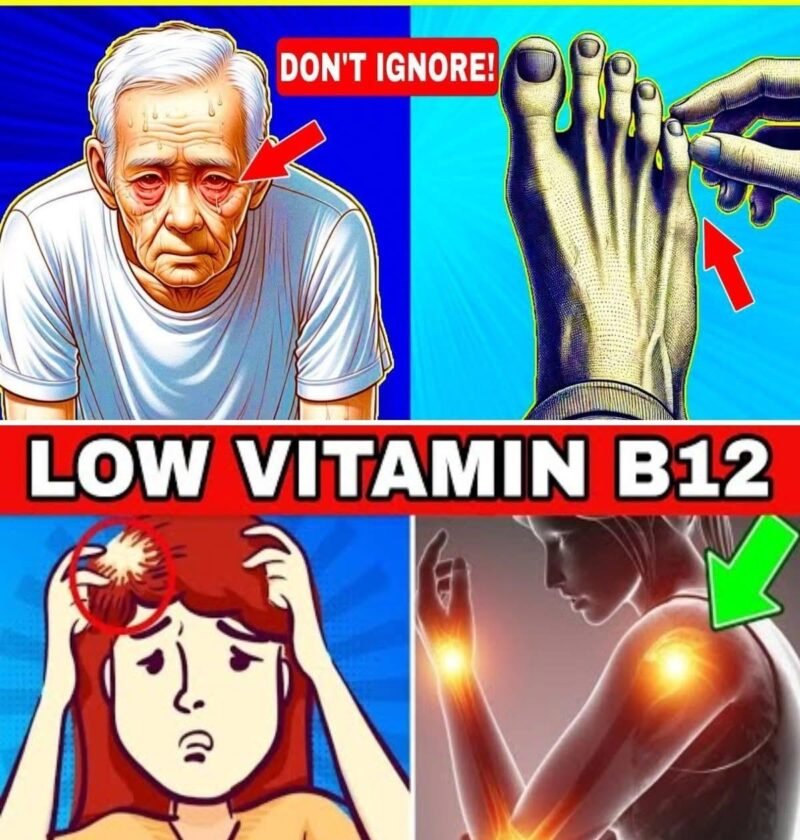
Vitamin B12 is essential for red blood cell formation, neurological function, and DNA synthesis. Because the body can store several years’ worth of B12 in the liver, a deficiency often develops very slowly, making its subtle warning signs easy to write off as stress, aging, or ordinary fatigue.
Nine lesser-known or overlooked signs that your body may need more vitamin B12 include:
-
1. “Pins and Needles” or Numbness: B12 is critical for maintaining myelin, the protective sheath that insulates your nerves. When levels drop, nerve signals can misfire, leading to a lingering tingling sensation in the hands or feet.
-
2. Brain Fog and Minor Memory Lapses: Struggling to find words, forgetting why you walked into a room, or feeling mentally sluggish can stem from low B12 affecting central nervous system function.
-
3. A Smooth, Sore Tongue (Glossitis): If the tiny bumps (papillae) on your tongue start to waste away, your tongue can look unusually smooth, glossy, or red, sometimes accompanied by a burning sensation or mouth ulcers.
-
4. Unexplained Clumsiness or Balance Issues: Nerve damage from a prolonged B12 shortage can alter your coordination and spatial awareness, causing you to trip more often or feel unsteady on your feet.
-
5. A Subtle Yellowish Tint to the Skin: Beyond general paleness from anemia, fragile oversized red blood cells break down faster, releasing excess bilirubin into the body which can give the skin or whites of the eyes a faint jaundice-like yellow hue.
-
6. Unexplained Mood Changes or Irritability: Because B12 helps regulate brain chemicals like serotonin and dopamine, a deficiency can manifest as sudden anxiety, low mood, or uncharacteristic irritability.
-
7. Feeling Colder Than Everyone Else: Without enough healthy red blood cells to efficiently circulate oxygen, you may experience persistent chills, particularly cold hands and feet, even in a warm room.
-
8. Shortness of Breath During Light Activity: Climbing a flight of stairs or carrying light groceries might leave you winded faster than usual because your tissues aren’t receiving enough oxygen.
-
9. Vision Changes: In rarer cases, prolonged B12 deficiency can damage the optic nerve, leading to blurred or double vision.
Note: If you suspect a deficiency, a simple routine blood test ordered by a doctor can check your serum B12 levels and help determine if dietary adjustments or supplements are needed.