Your feet are incredible indicators of your overall systemic health, often signaling underlying issues long before other symptoms appear. Doctors and podiatrists stress that persistent foot changes should never be brushed off as normal wear and tear.
Here are 9 vital foot symptoms you should never ignore and what they could potentially mean for your health:
1. Chronic Cold Feet
-
What it looks like: Feet that feel freezing cold to the touch even in warm weather, or a noticeable temperature difference between your two feet.
-
What it could mean: This is a classic hallmark of poor blood circulation, often linked to peripheral artery disease (PAD), where plaque narrows the arteries supplying blood to the limbs. It can also point to hypothyroidism or peripheral neuropathy.
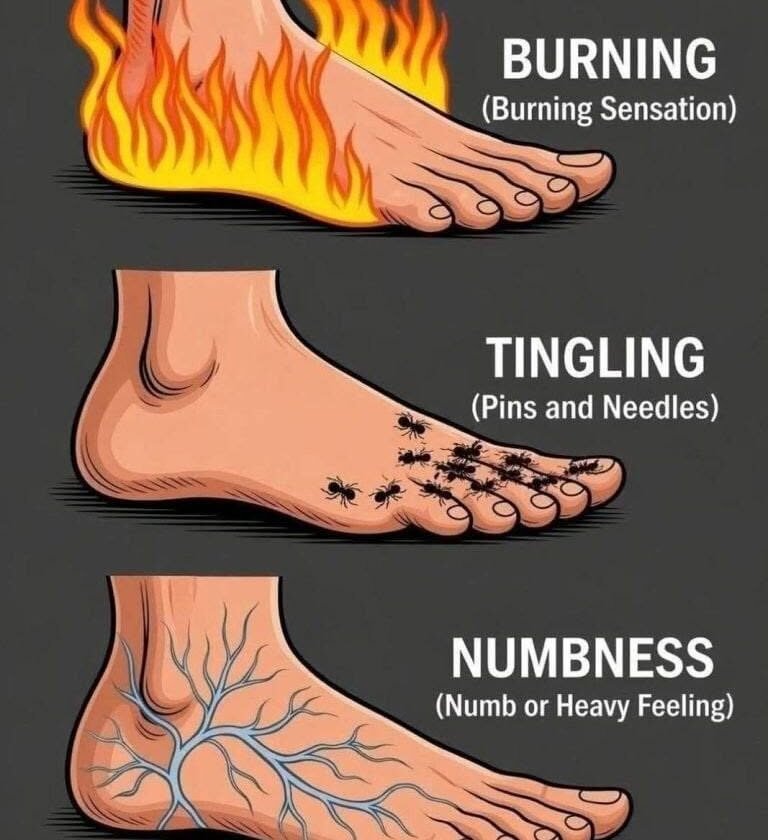
2. Numbness or a “Pins and Needles” Sensation
-
What it looks like: A persistent loss of feeling, tingling, or a prickling sensation in the toes or soles of the feet.
-
What it could mean: Frequently associated with peripheral neuropathy, most commonly triggered by poorly controlled diabetes or vitamin deficiencies (especially Vitamin B12). It can also indicate a pinched nerve in the lower back or spine.
3. A Painful, Swollen Big Toe
-
What it looks like: Sudden, severe pain, intense redness, warmth, and swelling concentrated around the joint of the big toe.
-
What it could mean: A primary indicator of gout, an inflammatory type of arthritis caused by a buildup of uric acid crystals in the joint. It can also signal an infection or an ingrown toenail.
4. Slow-Healing Sores, Cuts, or Ulcers
-
What it looks like: Wounds on the feet or toes that linger for weeks, fail to heal, or are surprisingly painless due to underlying nerve damage.
-
What it could mean: A major red flag for diabetes. Chronically high blood sugar impairs circulation and nerve function, severely inhibiting the body’s natural ability to repair minor tissue damage and increasing infection risks.
5. Thick, Yellow, or Crumbled Toenails
-
What it looks like: Discolored, thickened, brittle, or distorted nails that may begin lifting away from the nail bed.
-
What it could mean: Usually caused by a fungal infection (onychomycosis). However, persistent nail changes can also reflect underlying psoriasis or chronic circulatory problems.
6. Sharp Heel Pain (Especially in the Morning)
-
What it looks like: A sharp, stabbing pain in the heel when taking your very first steps out of bed in the morning or after a period of rest.
-
What it could mean: The defining symptom of plantar fasciitis, which is inflammation of the thick band of tissue running across the bottom of the foot. It can also suggest a heel spur or tendonitis.
7. Unexplained Swelling in Both Feet and Ankles
-
What it looks like: Puffy, swollen feet and ankles that retain an indentation when you press your finger into the skin (pitting edema).
-
What it could mean: While temporary swelling can result from long hours of standing, persistent edema can signal venous insufficiency (inefficient blood return to the heart), kidney disease, heart failure, or medication side effects.
8. Spontaneous Hair Loss on the Toes and Feet
-
What it looks like: Suddenly noticing that the hair on your toes and lower feet has stopped growing or completely disappeared.
-
What it could mean: Surprisingly, this is another subtle indicator of poor circulation or peripheral artery disease (PAD). When blood flow drops significantly, hair follicles on the extremities lack the oxygen and nutrients needed to survive.
9. A Dark Streak or Growth Under the Toenail
-
What it looks like: A dark brown or black streak, spot, or nodule underneath the toenail that does not grow out with the nail over time.
-
What it could mean: While many dark lines are harmless bruises caused by minor trauma (like stubbing a toe), a persistent, unusual dark lesion under the nail can sometimes indicate acral lentiginous melanoma, a serious form of skin cancer that can develop on the soles of the feet or nail beds.
When to Consult a Specialist
If you experience any of these symptoms—especially if they are persistent, worsening, or accompanied by systemic signs like unexplained fatigue, open sores, or sudden mobility changes—schedule an evaluation with a podiatrist, primary care physician, or vascular specialist. Catching underlying issues early can prevent minor foot concerns from evolving into major medical complications.