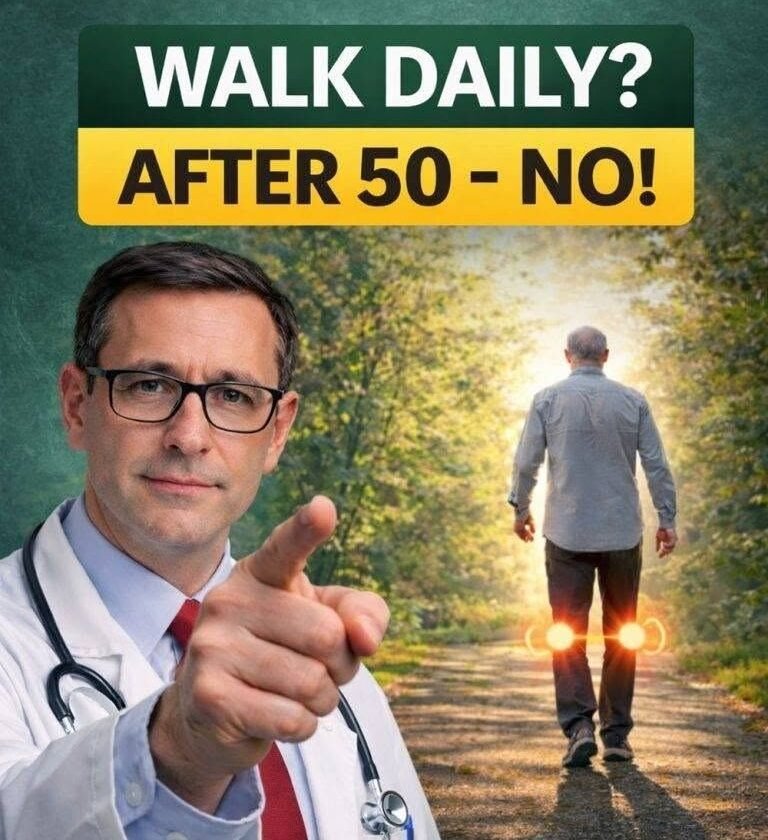
🚶 7 Walking Mistakes That Can Affect Your Health After 50
Walking is one of the simplest ways to stay active as you get older. But certain habits can reduce its benefits or increase your risk of injury.
1. 🚫 Walking with poor posture
Looking constantly down at the ground, rounding your shoulders, or leaning too far forward can place unnecessary strain on your neck and back.
Try: Keep your head comfortably upright, look ahead, relax your shoulders, and let your arms move naturally.
2. 👟 Wearing inappropriate shoes
Worn-out, loose, or poorly fitting shoes can contribute to discomfort, instability, and falls.
Try: Choose comfortable shoes that fit securely and provide appropriate traction and support.
3. 🏃 Increasing distance or speed too quickly
Doing too much too soon can lead to sore muscles, joint pain, or overuse injuries.
Try: Increase your walking time or distance gradually, especially if you’ve been inactive.
4. 🔥 Skipping a gradual warm-up
Starting immediately at a fast pace can feel harder on stiff muscles and joints.
Try: Begin slowly for several minutes, then gradually increase your pace.
5. 💧 Ignoring hydration
Longer walks, hot weather, and sweating can increase fluid needs.
Try: Drink fluids regularly and pay particular attention to hydration during hot weather, unless you’ve been told to restrict fluids.
6. 🛣️ Ignoring your surroundings
Uneven sidewalks, wet surfaces, poor lighting, and obstacles can increase the risk of falls.
Try: Choose well-lit routes, watch for changes in the walking surface, and use a walking aid if one has been recommended for you.
7. ⚠️ Walking through significant pain or unusual symptoms
Mild muscle soreness after increased activity can be normal, but persistent or worsening pain shouldn’t be ignored.
Stop exercising and seek medical advice for symptoms such as chest pressure, severe shortness of breath, fainting, or sudden weakness or dizziness.
❤️ Make walking work for you
You don’t need to walk extremely fast or for hours to benefit. Aim for regular, sustainable activity and gradually build your fitness. Adding strength and balance exercises can also be valuable as you age.
If you have heart disease, significant joint problems, or another chronic condition, ask your healthcare professional what level of activity is appropriate before substantially increasing your exercise.