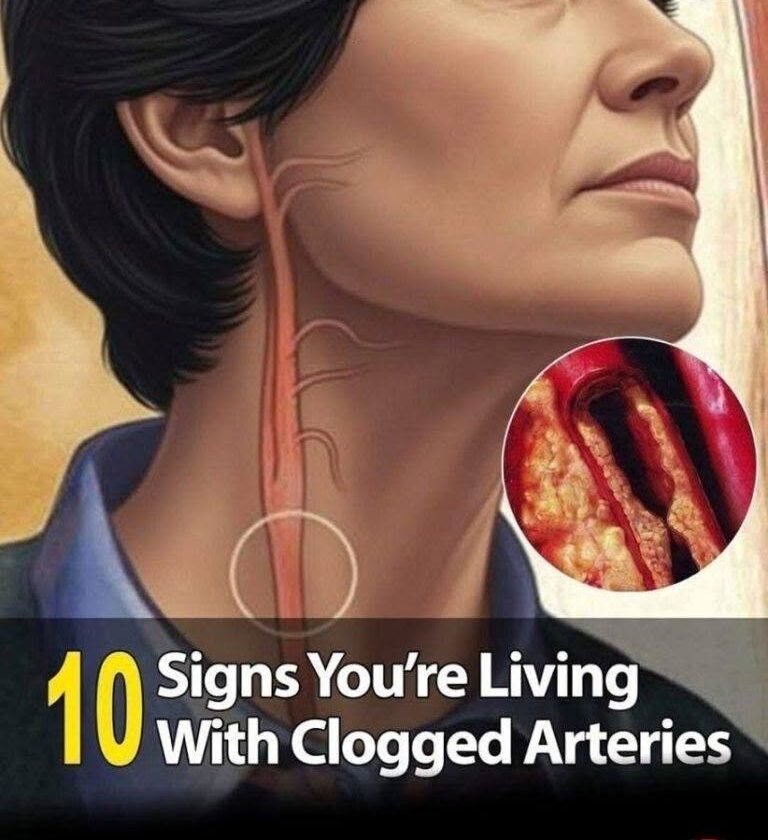
The headline “10 Indicators of Blocked Arteries You Shouldn’t Ignore” is a little misleading because narrowed arteries often cause no symptoms until blood flow is significantly reduced. The signs also depend on which arteries are affected. www.heart.org+1
10 possible warning signs
- Chest pressure, squeezing, or pain — can indicate reduced blood flow to the heart.
- Shortness of breath, particularly with exertion.
- Pain spreading to the arm, shoulder, back, neck, jaw, or upper abdomen.
- Unusual fatigue or weakness, especially with activity.
- Dizziness or lightheadedness.
- Cold sweats, nausea, or indigestion-like discomfort when occurring with other heart symptoms. professional.heart.org+1
- Leg pain or cramping while walking that improves after resting—this is a classic symptom of peripheral artery disease (PAD). www.heart.org
- A foot or leg that is noticeably colder than the other.
- Slow-healing sores on the feet or legs.
- Changes in skin color, reduced hair growth, or slow-growing toenails on the affected leg or foot. www.heart.org+1
🚨 Don’t wait if symptoms are sudden
Chest discomfort accompanied by shortness of breath, sweating, nausea, dizziness, or pain in the upper body can indicate a heart attack and requires emergency medical attention. www.heart.org+1
Also, symptoms alone cannot tell you that an artery is blocked. A healthcare professional may need to check blood pressure, cholesterol, blood sugar and circulation and perform appropriate tests.
If you want, I can also give you 10 early signs of clogged arteries that can appear months or years before a heart attack , with an explanation of which ones are actually supported by medical evidence.