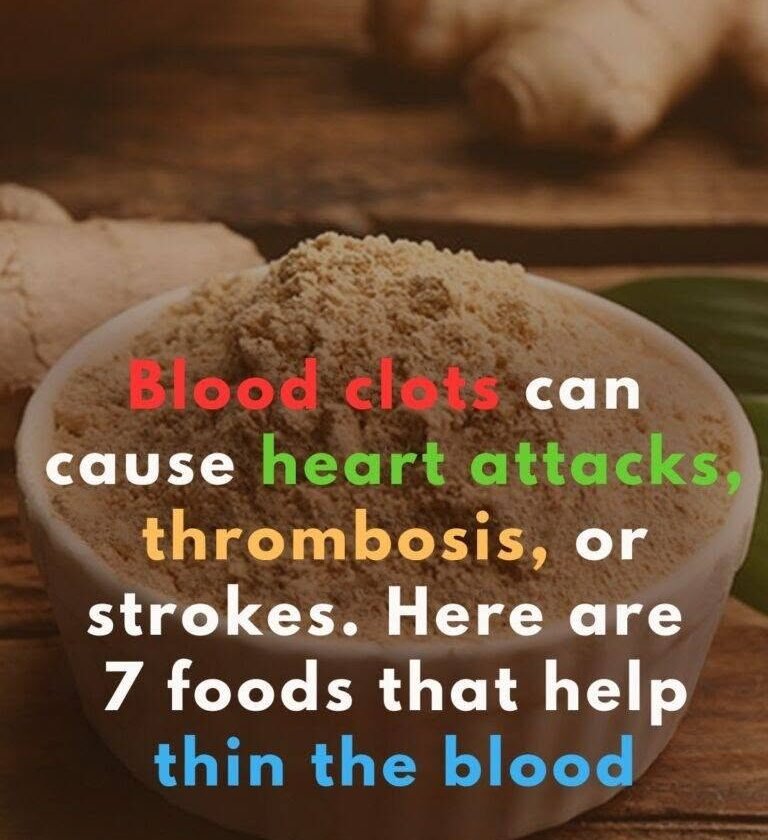
7 foods often called “natural blood thinners”
The phrase “blood-thinning food” can be misleading. Foods don’t work like prescription anticoagulants, and there is no food that can safely replace medication prescribed to prevent blood clots.
Some foods contain compounds that may influence platelet activity or blood clotting, but the effects from normal portions are generally much less predictable than medication.
-
Garlic 🧄 — Contains compounds that may affect platelet aggregation. Large amounts or concentrated garlic supplements can increase bleeding risk.
-
Ginger — Has compounds with possible antiplatelet effects, although evidence for a clinically meaningful effect from ordinary dietary amounts is limited.
-
Turmeric — Curcumin has been studied for effects on platelet function and inflammation. Supplements are much more concentrated than culinary use.
-
Fatty fish 🐟 — Salmon, sardines, and similar fish provide omega-3 fatty acids, which can modestly influence platelet function.
-
Green leafy vegetables 🥬 — Spinach, kale, and similar vegetables are rich in vitamin K. They don’t “thin” blood; instead, vitamin K is important for normal clotting.
-
Berries 🫐 — Provide polyphenols that have been studied for effects on cardiovascular health, but they aren’t anticoagulant medicines.
-
Green tea 🍵 — Contains compounds that may affect platelet function, while also containing vitamin K in varying amounts.
⚠️ Especially important if you take blood thinners
If you take warfarin, don’t suddenly eliminate or dramatically increase vitamin-K-rich foods such as spinach, kale, or other leafy greens. The goal is generally consistent intake, because large dietary changes can alter anticoagulation.
If you’re taking warfarin, apixaban, rivaroxaban, dabigatran, clopidogrel, aspirin, or another medication affecting clotting, tell your doctor or pharmacist before starting concentrated garlic, ginger, turmeric, fish-oil, or herbal supplements.
And if you have symptoms of a possible clot—such as sudden one-sided leg swelling/pain, chest pain, or sudden shortness of breath—don’t try to treat it with food; seek urgent medical care.