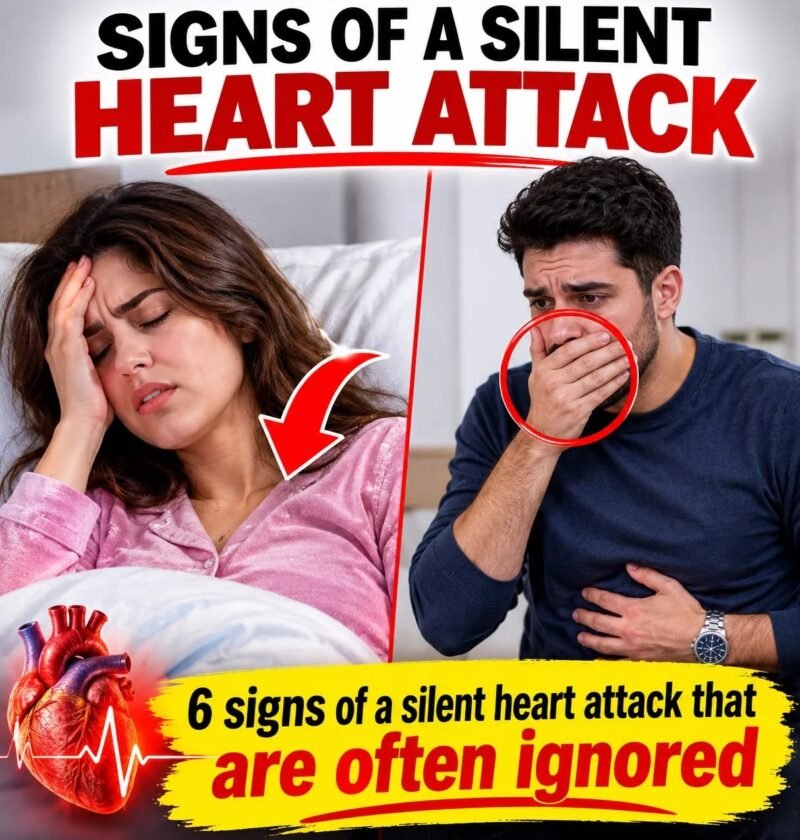
…alarmist health and wellness clickbait loves to use high-panic, terrifying hooks like “6 silent heart attack signs you are ignoring right now—number 3 means it’s already too late!” to make you obsess over every normal muscle twitch, gas bubble, or fleeting ache in your body.
While silent myocardial infarctions (silent heart attacks) are a medically documented phenomenon—meaning a heart attack occurs with mild, atypical, or even zero classic symptoms—the unvarnished medical reality is much more grounded: these symptoms aren’t hidden secrets; they are simply non-traditional ways the body signals cardiac distress, which are frequently missed because they mimic everyday aches, fatigue, or indigestion.
Let’s break down what a silent heart attack actually is, the signs that doctors look for, and how to separate normal bodily quirks from actual cardiac events.
What Is a “Silent” Heart Attack?
Medically known as an unrecognized myocardial infarction (UMI), a silent heart attack happens when blood flow to a section of the heart muscle is temporarily blocked or cut off, causing tissue damage (infarction), but the patient doesn’t experience the textbook, dramatic Hollywood heart attack—such as crushing chest pain radiating down the left arm.
Studies show that a significant percentage of heart attacks are “silent” and are often only discovered later incidentally during an routine electrocardiogram (ECG) or echocardiogram. They are particularly common in individuals with diabetes (due to diabetic neuropathy dampening pain signals), older adults, and women, who more frequently experience atypical symptoms.
The 6 Commonly Overlooked Signs of Cardiac Distress
When cardiologists discuss non-traditional or subtle heart attack symptoms, they focus on warning signs that deviate from classic chest pressure:
1. Unusual, Unexplained Fatigue
-
What it feels like: Feeling so profoundly exhausted that you cannot complete simple daily tasks, even after a full night’s sleep.
-
Why it happens: When the heart muscle is damaged or struggling to pump efficiently, blood flow to the rest of the body drops, forcing the body to redirect oxygen away from muscles and toward vital organs, triggering deep, sudden exhaustion.
2. Upper Body Discomfort (Beyond the Chest)
-
What it feels like: A dull ache, pressure, or tightness in the jaw, neck, upper back, shoulders, or down either arm (not just the left).
-
Why it happens: Cardiac nerves share spinal pathways with nerves from the jaw, neck, and arms. When the heart experiences ischemia (lack of oxygen), the brain can misinterpret the pain signals as coming from these upper body regions.
3. Shortness of Breath (Dyspnea) During Light Activity
-
What it feels like: Catching your breath or feeling winded after doing something minimal, like walking across a room or making the bed.
-
Why it happens: If the heart isn’t pumping blood effectively, fluid can back up slightly into the lungs, making ventilation feel labored even without heavy exertion.
4. Sudden Indigestion, Nausea, or Cold Sweats
-
What it feels like: A sudden wave of stomach upset, heartburn, nausea, or breaking out in a cold, clammy sweat for no apparent reason.
-
Why it happens: The inferior wall of the heart sits very close to the diaphragm and stomach. Cardiac distress in this area can trigger autonomic nervous system responses that mimic severe indigestion or a stomach bug.
5. Lightheadedness or Sudden Dizziness
-
What it feels like: A brief dizzy spell, wooziness, or feeling like you might faint when standing up or moving around.
-
Why it happens: A compromised heart can cause a sudden drop in blood pressure, depriving the brain of adequate blood flow and oxygen.
6. A General Feeling of “Impending Doom”
-
What it feels like: An inexplicable, profound sense of anxiety, unease, or that something is deeply, physically wrong with your body.
-
Why it happens: Patients who survive cardiac events often report a powerful psychological or physiological alarm response—the body’s autonomic nervous system sounding the internal alarm that survival is threatened.
When to Seek Emergency Care
While it is easy to mistake these symptoms for everyday stress, acid reflux, or muscle strain, never try to diagnose a heart attack at home.
If you or someone else experiences sudden, unusual upper body discomfort, unexplained shortness of breath, cold sweats, or dizziness—especially if it comes on unexpectedly or worsens with exertion—do not wait it out. Call emergency services immediately. Modern emergency medicine can test cardiac enzymes (troponin) and run an ECG in minutes to definitively rule out a heart event.
The Bottom Line
Don’t live in fear of every random muscle ache or bout of indigestion. But if you experience a cluster of unusual, persistent symptoms—particularly if you have cardiovascular risk factors like high blood pressure, diabetes, or a family history of heart disease—listen to your body and seek professional medical evaluation.