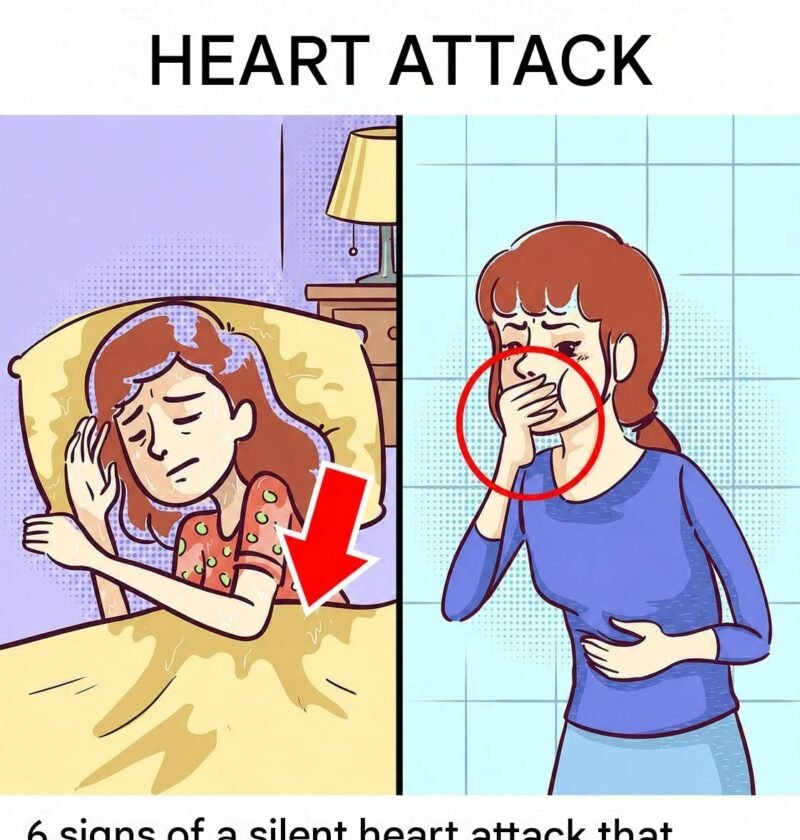
When most people think of a heart attack, they picture the dramatic Hollywood scenario: sudden, crushing chest pain that causes a person to clutch their chest and collapse. But in reality, a silent heart attack (medically known as a silent myocardial infarction, or SMI) accounts for nearly half of all heart attacks.
Because the symptoms are subtle, vague, or entirely painless, people often brush them off as indigestion, ordinary fatigue, or muscle strain.
Here are 6 still-overlooked signs of a silent heart attack that you should never ignore:
1. Unexplained, Overwhelming Fatigue
-
What it feels like: A sudden, crushing exhaustion that hits you out of nowhere, making you feel as though you just ran a marathon when you’ve done nothing more than sit at a desk, make the bed, or walk down the hall.
-
Why it happens: When a coronary artery is blocked, your heart muscle struggles to pump blood efficiently. Your body diverts vital oxygen away from your muscles and toward your core, leaving you feeling profoundly, inexplicably drained.
2. Vague Upper Body Discomfort (No Chest Pain)
-
What it feels like: A dull ache, pressure, or tightness that doesn’t necessarily center on your chest. Instead, it might feel like a heavy band wrapped around your upper back, a dull ache in your shoulder blades, or a strange pressure in your throat or jaw.
-
Why it happens: Cardiac nerves share pathways with nerves in the jaw, neck, arms, and upper back. When the heart is under distress, pain signals can get “crossed,” causing discomfort far away from the heart itself.
3. Sudden Shortness of Breath (Dyspnea)
-
What it feels like: Catching your breath becomes surprisingly difficult during routine activities—like folding laundry or talking on the phone—or even while resting quietly on the couch.
-
Why it happens: If the heart muscle is damaged and can’t pump effectively, blood backs up slightly into the lungs. This creates a mild fluid buildup, making your lungs feel starved for air even when you aren’t exerting yourself.
4. Cold Sweats and Clamminess (Diaphoresis)
-
What it feels like: Suddenly breaking out into a cold, clammy sweat or feeling chilled for no apparent reason, often accompanied by pale skin.
-
Why it happens: A heart attack is a major physical emergency that triggers your body’s “fight or flight” response. This adrenaline surge constricts blood vessels and activates sweat glands, even if you aren’t warm or anxious.
5. Sudden Nausea, Indigestion, or Heartburn
-
What it feels like: A sour stomach, sudden queasiness, or a burning sensation in your upper abdomen that feels suspiciously like a bad meal or acid reflux.
-
Why it happens: The inferior wall of the heart sits very close to the diaphragm and stomach. When this part of the heart is deprived of oxygen, it can trigger gastrointestinal distress, leading people to pop an antacid when they should be seeking medical help.
6. Lightheadedness or a Fleeting Dizziness
-
What it feels like: A brief wave of dizziness, wooziness, or feeling as though the room is tilting slightly when you stand up or shift positions.
-
Why it happens: When the heart encounters a blockage or arrhythmia, its pumping efficiency drops, temporarily starving the brain of a steady, optimal blood flow.
Why Silent Heart Attacks Matter So Much
Because a silent heart attack lacks the hallmark chest pain, people often go about their days—or even weeks—without knowing a cardiac event occurred. However, scar tissue forms just the same, weakening the heart muscle over time and increasing the risk of future, more severe cardiac events.
If you experience a strange combination of these symptoms—especially if they come on suddenly or persist—never wait “to see if it passes.” A quick electrocardiogram (ECG) at a clinic or ER can catch what your body is trying to tell you.