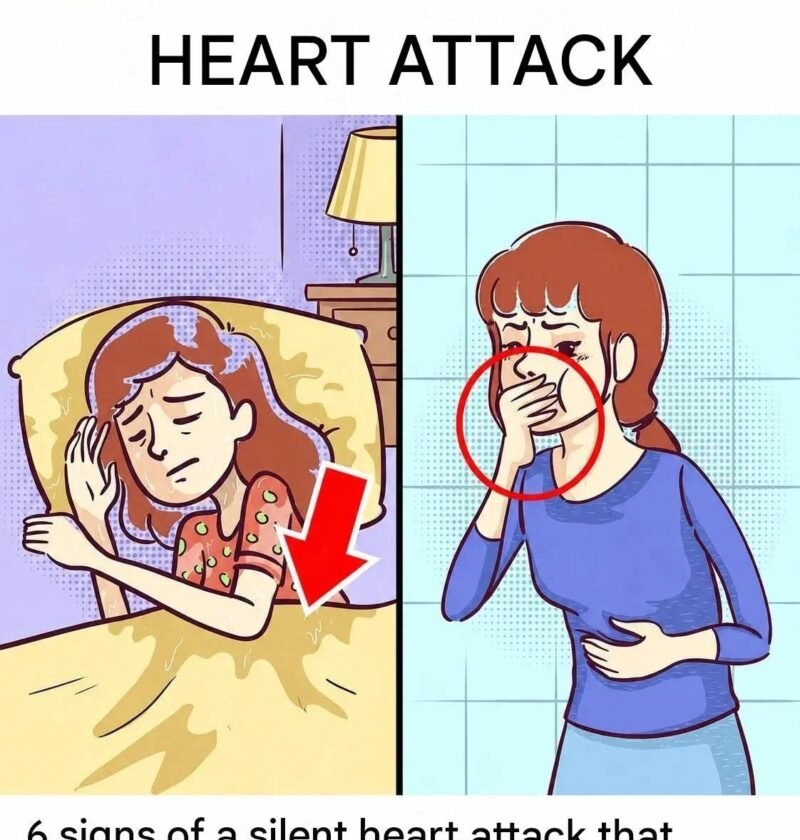
6 Subtle Warning Signs Often Overlooked
-
Mild Chest Discomfort, Pressure, or Fullness Instead of sharp pain, it often feels like uncomfortable pressure, squeezing, heaviness, or a dull ache in the center of the chest that may come and go.
-
Unexplained Shortness of Breath Feeling winded during light everyday tasks—like walking up a short flight of stairs, carrying groceries, or even while resting—with or without chest discomfort.
-
Sudden, Unusual Fatigue Overwhelming exhaustion that doesn’t improve with rest and feels out of proportion to your activity level. This is especially common in women, sometimes appearing days or weeks before an event.
-
Pain or Discomfort in the Upper Body Aches, tingling, or pressure radiating to one or both arms (especially the left), the back, neck, jaw, or upper stomach.
-
Indigestion, Nausea, or Heartburn A burning sensation in the upper abdomen, nausea, or bloating that feels like acid reflux or a stomach bug—particularly when it doesn’t respond to antacids or isn’t tied to a heavy meal.
-
Cold Sweats, Dizziness, or Lightheadedness Breaking out into a sudden cold sweat without exertion, accompanied by feeling faint, woozy, or unusually anxious.
Who Is at Higher Risk?
When to seek immediate help: If you or someone around you suddenly experiences any combination of these symptoms—especially chest pressure, shortness of breath, cold sweats, or radiating jaw/arm pain—treat it as a medical emergency and call your local emergency services right away rather than waiting to see if it passes.