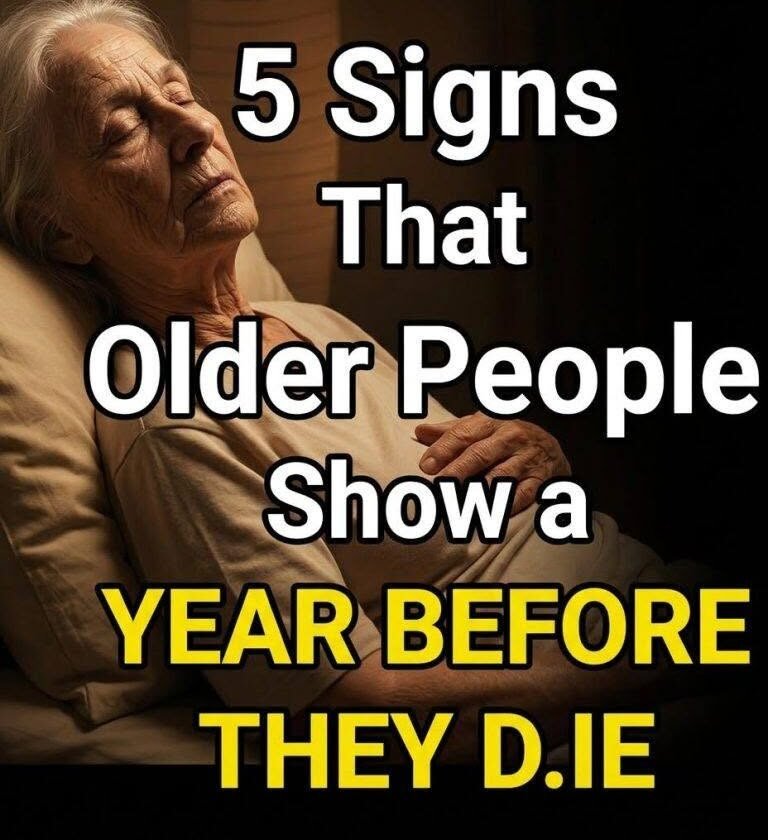
5 Changes That Can Occur Near the End of Life
A headline saying these signs mean an older person is “in their last year” is too certain. Some changes can occur during advanced illness or the final months of life, but they can also result from treatable conditions. No single symptom can reliably predict how long someone has left.
Possible changes include:
- Increasing weakness and fatigue — everyday activities may become progressively harder.
- Reduced appetite and food intake — people approaching the end of life often naturally eat and drink less.
- More sleeping or reduced alertness — periods of wakefulness may become shorter.
- Increasing dependence on others — help may be needed with bathing, dressing, walking, or other daily activities.
- Withdrawal or changes in communication — someone may become quieter or less interested in social interaction.
An important distinction
These signs are more meaningful when there is a known serious or progressive illness and an overall pattern of decline. They should not be used to conclude that a healthy older person is dying.
If an older person suddenly develops confusion, severe weakness, difficulty breathing, inability to eat or drink, or a major change in consciousness, seek medical assessment. Some causes are urgent but treatable.
For someone with an advanced illness, a doctor or palliative-care team can provide a much more individualized assessment of prognosis and help keep the person comfortable.