If you’re creating a health-awareness post, here’s a medically cautious version. Nighttime symptoms can have many causes, so they don’t by themselves diagnose diabetes.
Writing
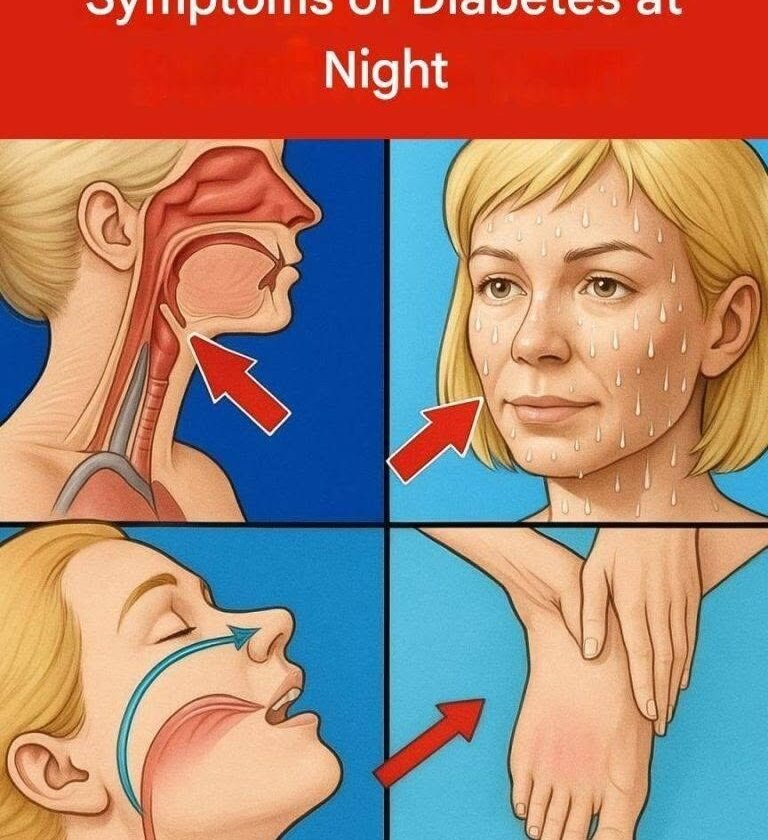
5 Diabetes Symptoms That May Appear at Night 🌙
Some symptoms of high or low blood sugar can become more noticeable during the night. If they happen repeatedly, they shouldn’t be ignored.
Frequent nighttime urination 🚽
High blood sugar can cause the kidneys to remove extra glucose through urine, increasing urination and thirst.
Unusual thirst or a dry mouth 💧
Losing more fluid through frequent urination can leave you especially thirsty at night.
Night sweats or sudden sweating 💦
In someone taking insulin or certain diabetes medications, sweating during sleep can be a sign of low blood sugar (hypoglycemia).
Shaking, hunger, or a racing heartbeat ❤️
These can also occur when blood sugar drops too low during the night.
Poor sleep, fatigue, or morning headaches 😴
Blood-sugar fluctuations can interfere with sleep, although these symptoms have many other possible causes.
🩺 When to get checked
If you’re repeatedly waking to urinate, experiencing unexplained thirst, sweating, shakiness, or unusual fatigue, talk with a healthcare professional. A blood glucose test or HbA1c test can help determine whether diabetes or prediabetes is present.
If someone with diabetes becomes severely confused, loses consciousness, has a seizure, or cannot safely swallow, seek emergency medical help.