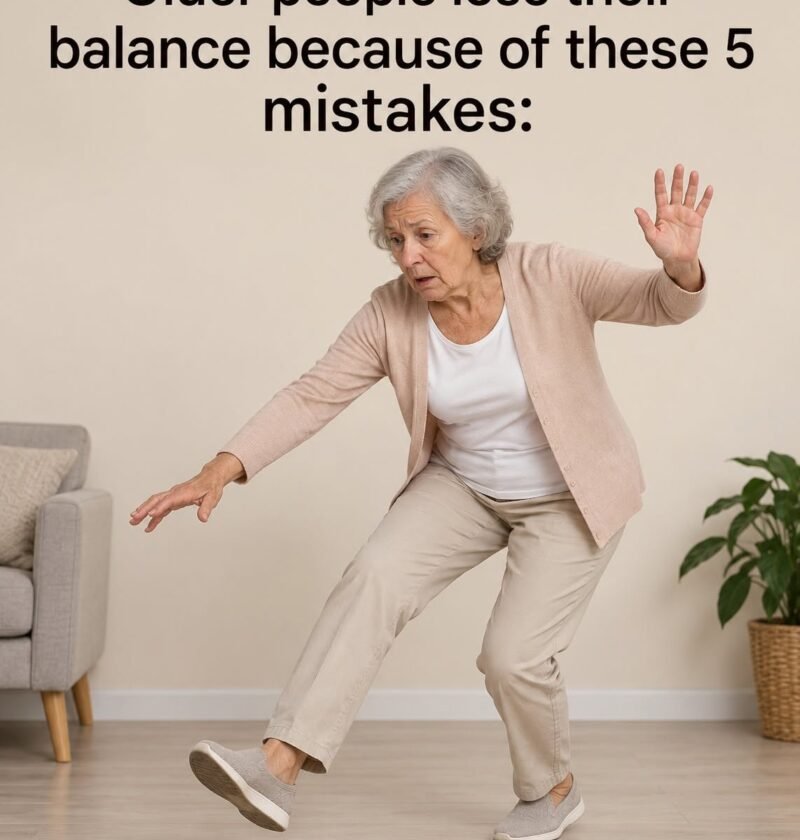
5 Common Mistakes That Can Affect Balance in Older Adults
Balance can become more challenging with age, but some everyday habits can make the problem worse. The good news is that such as facial drooping, arm or leg weakness, difficulty speaking, severe headache, or new vision problems, because these can be signs of a many are modifiable.
- Being too sedentary
Avoiding movement can reduce leg strength and balance skills. Safe walking and balance exercises, adapted to your abilities, can help maintain function. - Wearing unsafe footwear
Loose slippers, high heels, and shoes with poor traction can increase instability. Supportive, well-fitting shoes with nonslip soles are generally a better choice. - Ignoring vision or hearing changes
Vision and hearing contribute to spatial awareness. Regular eye examinations and addressing hearing problems can help identify correctable contributors to balance difficulties. - Taking medications without reviewing their effects
Some medicines can cause dizziness, drowsiness, low blood pressure, or impaired coordination. Don’t stop prescribed medication yourself; ask a doctor or pharmacist to review your medications if you experience these symptoms. - Leaving fall hazards around the home
Loose rugs, clutter, poor lighting, and the lack of handrails can turn a small balance problem into a fall. Keep walkways clear, improve lighting, and install grab bars or handrails where appropriate.
When to get medical help
New, sudden, or rapidly worsening balance problems deserve medical assessment. Seek emergency care if loss of balance occurs suddenly with symptoms such as facial drooping, arm or leg weakness, difficulty speaking, severe headache, or new vision problems, because these can be signs of a stroke.
For recurring dizziness or falls, a clinician can look for potentially treatable causes—including medication effects, blood-pressure changes, inner-ear problems, vision issues, and neurological or musculoskeletal conditions.