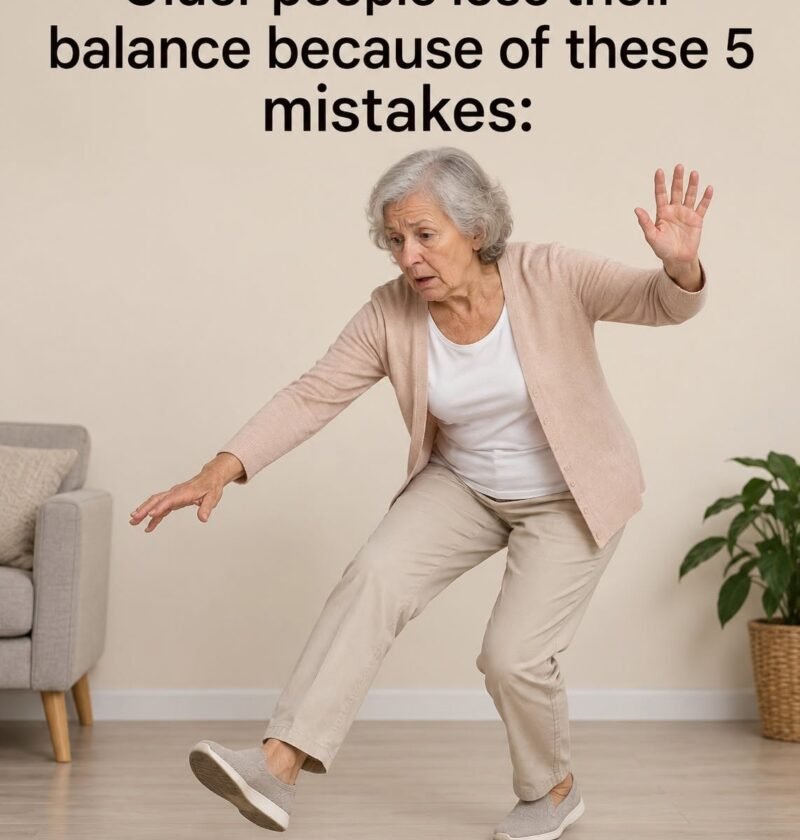
5 Common Mistakes That Can Affect Balance in Older Adults
Balance problems become more common with age, but some everyday habits can increase the risk of dizziness, unsteadiness, and falls.
-
Being too inactive
Avoiding physical activity can weaken the legs and reduce coordination. Regular walking, strength exercises, and appropriate balance exercises can help maintain mobility. -
Wearing unsafe footwear
Loose slippers, worn-out soles, or shoes that don’t fit properly can make slipping or tripping more likely. Supportive, well-fitting footwear is preferable. -
Getting up too quickly
Standing suddenly—especially from bed—can cause lightheadedness from a temporary drop in blood pressure. Sit on the edge of the bed for a moment before standing. -
Ignoring vision changes
Poor vision can make it difficult to detect obstacles, steps, and changes in flooring. Regular eye examinations and appropriate glasses can help. -
Not reviewing medications
Some medications can cause drowsiness, dizziness, or low blood pressure, all of which can affect balance. A doctor or pharmacist can review medications and possible side effects.
One important warning
Sudden loss of balance, particularly when accompanied by facial drooping, weakness or numbness on one side, difficulty speaking, severe headache, or vision changes, can be a sign of a stroke. Seek emergency medical care immediately.
For recurring balance problems, it’s worth having a healthcare professional assess medications, vision, blood pressure, muscle strength, gait, and neurological function rather than assuming it’s simply a normal part of aging.