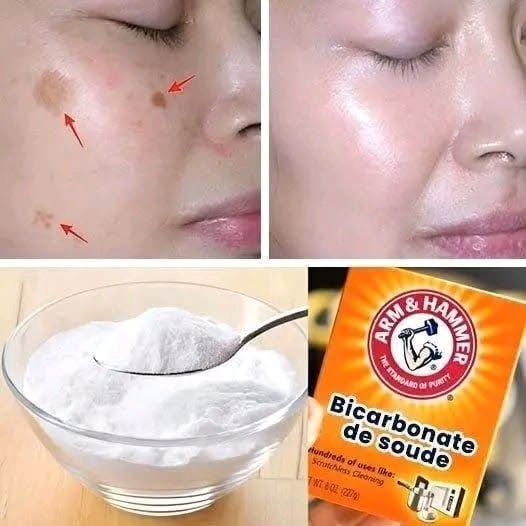
While internet articles and DIY beauty trends frequently suggest using baking soda to fade age spots, hyperpigmentation, or uneven skin tone, dermatologists strongly advise against using baking soda on your skin.
Here is what you need to know about why this home remedy is risky, how it affects the skin, and what you should use instead.
Why Baking Soda Doesn’t Actually Erase Age Spots
-
Surface-Level Only: Age spots (solar lentigines) are caused by excess melanin production deep within the lower layers of the epidermis, triggered by UV exposure. Baking soda is a coarse physical scrub. At best, it might slightly slough off a few dead skin cells on the absolute surface, but it cannot reach or alter the deep pigment causing the dark spot.
-
The Risk of Worsening Discoloration: Ironically, scrubbing baking soda onto age spots can cause micro-tears and skin irritation. When the skin becomes inflamed or injured, it often responds by producing more melanin as it heals—meaning the dark spots can actually end up darker.
The Risks to Your Skin Barrier
Baking soda has a very high (alkaline) pH of around 9, whereas your skin naturally prefers a slightly acidic environment (between 4.5 and 5.75), known as the acid mantle.
Applying baking soda to your skin can:
-
Strip natural oils and moisture, severely disrupting your skin barrier.
-
Cause redness, flaking, burning, and contact dermatitis, especially on delicate facial skin.
-
Increase vulnerability to bacteria, breakouts, and environmental irritation.
Safe and Proven Alternatives for Even Skin Tone
If you want to fade age spots and achieve a brighter, more even complexion, dermatologists recommend science-backed, pH-balanced ingredients that target melanin production safely:
-
Daily Sunscreen (SPF 30 or higher): This is the single most important step. Without daily sun protection, new age spots will continue to form, and existing ones will darken even if you treat them.
-
Vitamin C: A powerful antioxidant that inhibits melanin production, brightens the complexion, and fights free radical damage from the sun.
-
Niacinamide (Vitamin B3): Helps fade hyperpigmentation, calms inflammation, and strengthens the skin barrier without irritation.
-
Gentle Chemical Exfoliants (AHAs/PHAs): Instead of abrasive baking soda scrubs, ingredients like lactic acid or glycolic acid gently dissolve dead skin cells and encourage cell turnover safely.
-
Retinoids: Prescription or over-the-counter retinoids speed up skin cell turnover, helping to push pigmented cells to the surface and fade dark spots over time.
Note: If you have a dark spot that is rapidly changing shape, growing, bleeding, or has irregular borders, it should always be evaluated by a board-certified dermatologist to rule out skin cancer.