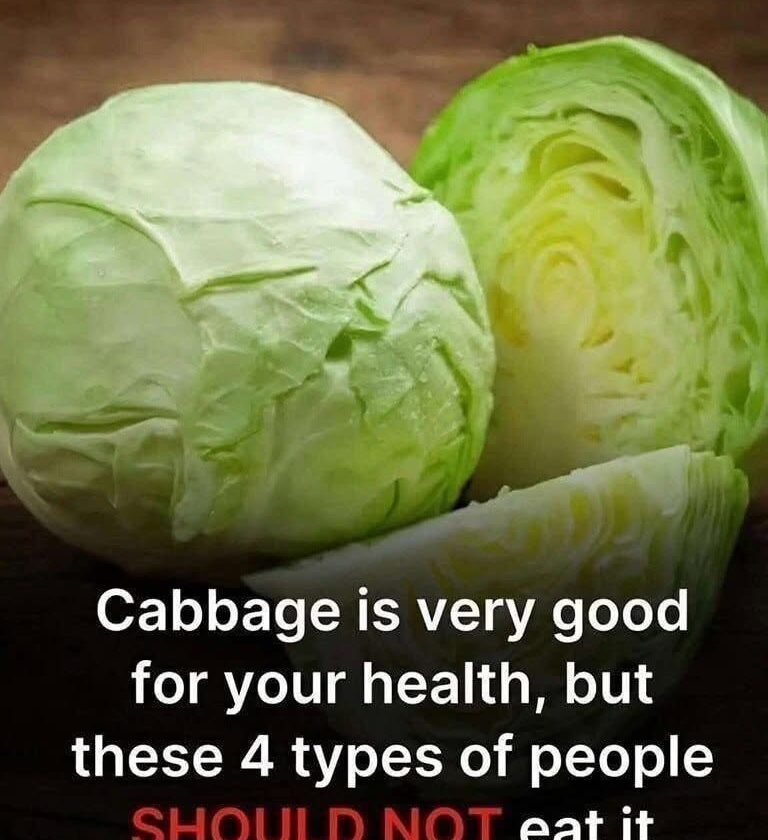
While cabbage is a nutritional powerhouse packed with vitamins C and K, fiber, and powerful antioxidants, it isn’t the ideal choice for everyone. Certain health conditions, digestive sensitivities, and medications can make eating raw or large amounts of cabbage uncomfortable—or even risky.
Here are 4 types of people who should exercise caution or avoid eating cabbage:
1. People with Irritable Bowel Syndrome (IBS) or Chronic Bloating
Cabbage is rich in a specific type of fermentable carbohydrate known as FODMAPs (specifically raffinose).
-
The Issue: When these complex sugars reach the large intestine, gut bacteria rapidly ferment them, producing significant gas, cramping, and abdominal bloating. For individuals with sensitive digestive tracts like IBS, even a moderate serving of cabbage can trigger severe discomfort.
2. Individuals Taking Blood-Thinning Medications (like Warfarin)
Cabbage is exceptionally high in Vitamin K, which plays a vital role in blood clotting.
-
The Issue: If you take anticoagulant medications (blood thinners such as Warfarin/Coumadin), consistency is key. Sudden increases or large fluctuations in your Vitamin K intake can directly interfere with how these medications work, potentially altering your blood’s clotting time. (Note: You don’t necessarily have to ban it entirely, but portion control and consistency with your doctor’s guidance are essential).
3. People with Hypothyroidism (Underactive Thyroid)
Cabbage contains natural compounds called goitrogens.
-
The Issue: Goitrogens can interfere with the thyroid gland’s ability to absorb iodine, which is necessary for producing thyroid hormones. While moderate amounts cooked (heat breaks down most goitrogens) are generally fine for most people, eating large amounts of raw cabbage can negatively impact thyroid function if you already have an iodine deficiency or hypothyroidism.
4. Anyone Prone to Acid Reflux or GERD
Cruciferous vegetables like cabbage are dense and fibrous, taking longer to digest.
-
The Issue: For individuals with Gastroesophageal Reflux Disease (GERD) or frequent heartburn, eating gassy, high-fiber raw vegetables can slow stomach emptying and increase intra-abdominal pressure, making acid reflux and burping much more likely—especially if eaten close to bedtime.
How to Enjoy Cabbage More Safely
If you fall into one of these categories but still love cabbage, preparation makes all the difference:
-
Cook it thoroughly: Boiling, steaming, or fermenting (like in sauerkraut) breaks down complex sugars and goitrogens, making it much gentler on the digestive system and thyroid.
-
Watch your portions: Instead of eating a massive bowl of raw coleslaw, start with a small, side-dish portion to see how your body reacts.