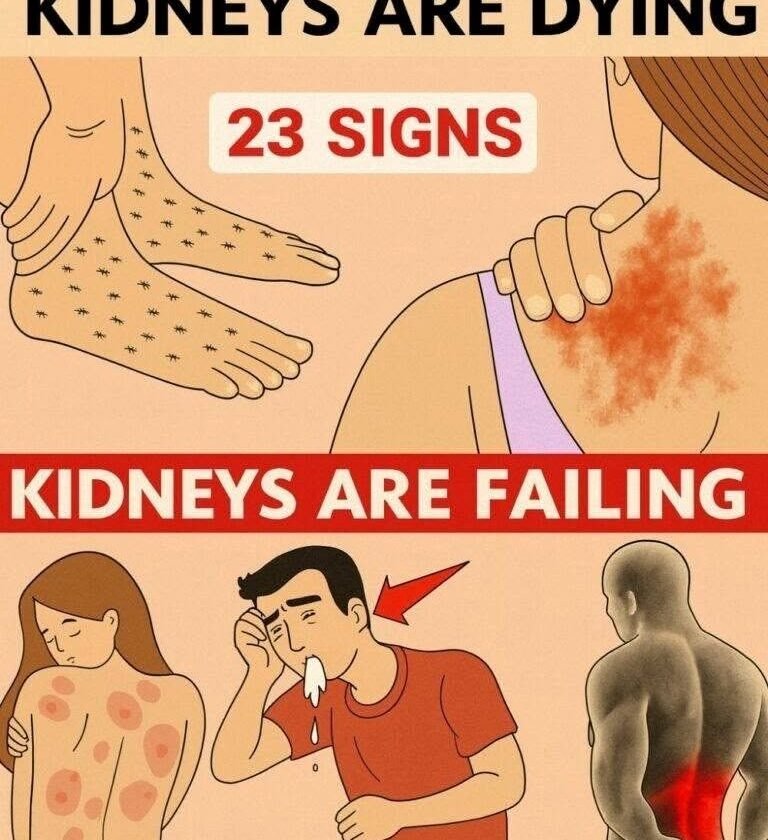
Genuine Warning Signs That Can Point to Kidney Trouble
-
Changes in urination:
-
Foamy or bubbly urine that doesn’t flush away easily (a sign of excess protein leaking into urine, called proteinuria).
-
Pink, red, or cola-colored urine (blood in the urine, or hematuria).
-
Waking up frequently at night to urinate or producing noticeably less urine than usual.
-
-
Swelling (edema) around the eyes and ankles:
-
Puffiness around the eyes, especially in the morning, happens when damaged kidney filters leak protein into urine.
-
Swelling in the feet, ankles, and lower legs occurs when the kidneys cannot clear excess sodium and water.
-
-
Persistent fatigue, weakness, and brain fog: Healthy kidneys produce erythropoietin (EPO), a hormone that signals bone marrow to make red blood cells. Failing kidneys produce less EPO, leading to anemia—causing deep tiredness, dizziness, and feeling unusually cold.
-
Metallic taste in the mouth and loss of appetite: Waste buildup (uremia) alters taste buds (making food taste metallic or like ammonia), causes bad breath, and triggers morning nausea or unexplained weight loss.
-
Severe, widespread dry and itchy skin: Advanced kidney impairment disrupts mineral and bone balance (especially phosphorus and calcium), leading to persistent itching that standard lotions do not relieve.
-
Muscle cramps (especially at night): Imbalances in calcium, potassium, and magnesium make leg muscles twitch or cramp painfully.
Why “23 Strange Signs” Listicles Can Mislead You
-
Most items on long lists are non-specific: Feeling tired, having dry skin in winter, or waking up once at night to pee are far more commonly caused by dehydration, poor sleep, aging, or thyroid issues than kidney disease.
-
Waiting for symptoms delays early detection: You can lose up to 50% to 70% of kidney function before feeling noticeably sick—which is why doctors never rely on symptom checklists alone to screen for kidney health.
Who Actually Needs Routine Kidney Screening
-
High blood pressure (hypertension) or diabetes (the top two causes of chronic kidney disease worldwide)
-
Heart disease or a family history of kidney failure
-
Frequent, long-term use of NSAID painkillers (such as ibuprofen, diclofenac, or naproxen) or unregulated herbal supplements