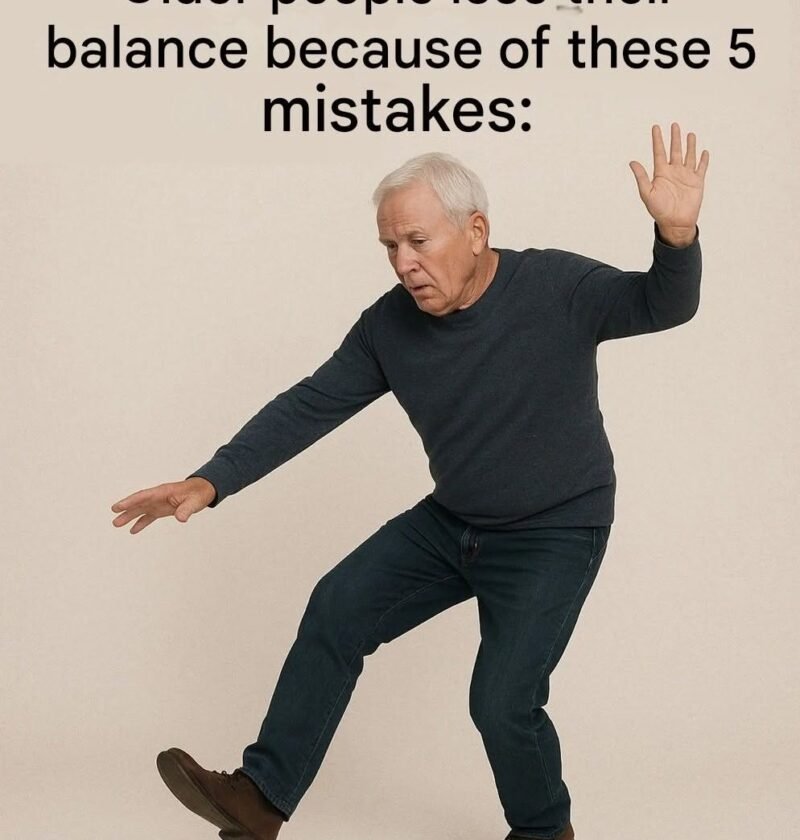
5 Common Mistakes That Can Cause Older Adults to Lose Their Balance
Balance problems aren’t always an unavoidable part of aging. Everyday habits, medication effects, vision problems, and unsafe surroundings can all increase the risk of losing balance and falling.
1. 🚶 Staying inactive
Spending most of the day sitting can weaken the muscles that help keep you steady. Regular walking and appropriately challenging strength and balance exercises can help maintain mobility.
2. 👟 Wearing unsafe footwear
Loose slippers, slippery soles, and poorly fitting shoes can make walking less stable. Choose comfortable shoes that fit securely and have good traction.
3. 💊 Ignoring medication side effects
Some medications can cause dizziness, drowsiness, or low blood pressure, increasing fall risk. Don’t stop prescribed medicines on your own—ask a doctor or pharmacist to review them if you notice new unsteadiness.
4. 👀 Neglecting vision checks
Poor vision can make it harder toLoose rugs, clutter, electrical cords, poor lighting, and slippery bathroom surfaces can turn an ordinary walk spot steps, obstacles, and uneven surfaces. Regular eye examinations and appropriate glasses can help.
5. 🏠 Leaving fall hazards around the home
Loose rugs, clutter, electrical cords, poor lighting, and slippery bathroom surfaces can turn an ordinary walk into a fall.
🚨 Don’t ignore sudden balance problems
If an older person suddenly loses balance—especially with facial drooping, one-sided weakness or numbness, trouble speaking, vision changes, or a severe headache—treat it as a possible stroke and seek emergency medical attention immediately.
For balance problems that develop gradually or keep returning, a healthcare professional can look for treatable causes such as medication effects, low blood pressure, inner-ear problems, vision changes, muscle weakness, or neurological conditions.