10 Important Stroke Symptoms in Women You Should Never Ignore
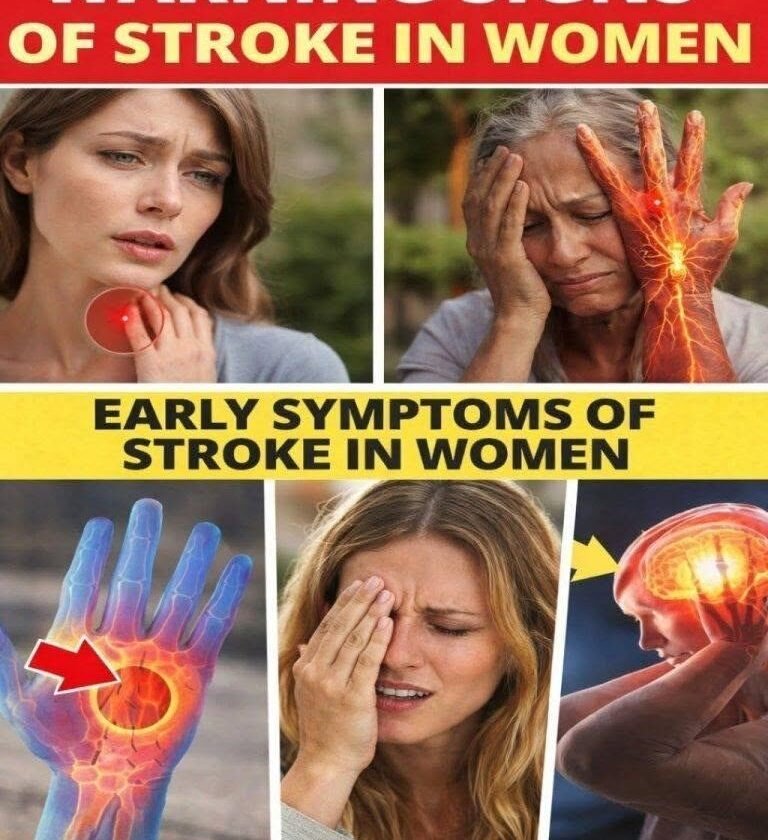
Stroke symptoms in women are often the same as in men, but women can also experience symptoms that are less obvious and may be mistaken for other problems. Recognizing them quickly is critical because stroke treatment is time-sensitive.
C
CDC
+1
10 symptoms to know
Sudden numbness or weakness — especially in the face, arm, or leg on one side.
Facial drooping — one side of the face may suddenly feel numb or look uneven when smiling.
Speech difficulties — slurred speech, difficulty speaking, or trouble understanding others.
Sudden vision changes — blurred, double, or lost vision in one or both eyes.
Sudden dizziness or loss of balance — difficulty walking, coordinating movements, or staying upright.
A sudden severe headache — particularly a headache with no known cause.
Sudden confusion or disorientation — difficulty knowing where you are or what’s happening.
Memory problems — sudden difficulty remembering or processing information.
Unexplained nausea or vomiting — particularly when it occurs suddenly along with neurological symptoms.
Sudden unusual weakness or extreme fatigue — especially when it occurs together with other stroke symptoms.
W
www.stroke.org
+1
🚨 Don’t wait for symptoms to disappear
Use B.E. F.A.S.T.:
B — Balance: sudden loss of balance or coordination
E — Eyes: sudden vision changes
F — Face: facial drooping
A — Arm: weakness or numbness
S — Speech: slurred or difficult speech
T — Time: call your local emergency service immediately
If any of these symptoms appear suddenly, call emergency services immediately and note the time the symptoms began. Don’t drive yourself to the hospital.
C
CDC
+1
Even if symptoms completely disappear after a few minutes, they could represent a transient ischemic attack (TIA), which still requires urgent medical evaluation.
C
CDC
+1
Women also have some unique stroke risk factors, including pregnancy-related high blood pressure and certain contraceptive-related risks. High blood pressure remains one of the most important modifiable risk factors for stroke.
C
CDC
Bottom line: Don’t wait for a “classic” stroke symptom. Sudden neurological or vision changes—especially when several occur together—should be treated as an emergency.
C
W
Sources