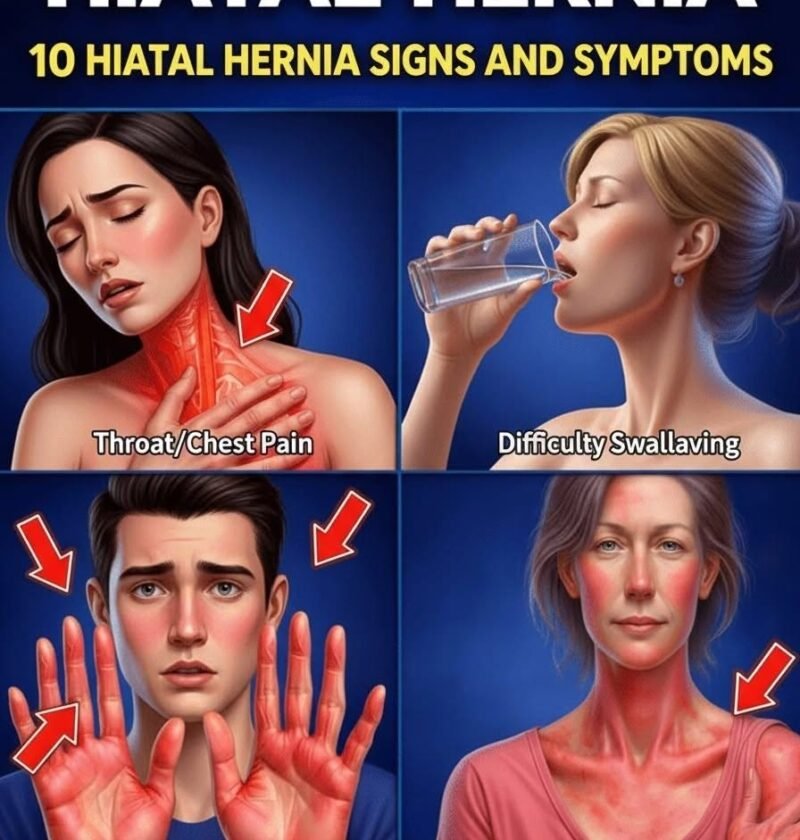
A hiatal hernia occurs when the upper part of your stomach pushes upward through the hiatus—a small opening in your diaphragm (the muscle separating your abdomen from your chest). While many small hiatal hernias cause no symptoms at all and are often discovered incidentally, larger ones can disrupt your digestive tract and cause noticeable discomfort.
Here are 10 signs and symptoms of a hiatal hernia to look out for to improve your digestive awareness:
1. Frequent Heartburn
This is the most common symptom. Because the hernia can compromise the lower esophageal sphincter (the valve keeping stomach contents down), stomach acid easily leaks backward into the esophagus, causing a painful burning sensation in your chest.
2. Acid Reflux and Regurgitation
You may experience a sour or bitter-tasting fluid, or even small amounts of undigested food, rising unexpectedly into your throat or mouth—especially after bending over, lying down, or eating a heavy meal.
3. Chest Pain
The discomfort from a hiatal hernia or severe acid reflux can radiate intensely across your chest. Because it can mimic cardiac distress, severe or unfamiliar chest pain should always be evaluated immediately by a medical professional to rule out a heart attack.
4. Early Satiety (Feeling Full Quickly)
Because part of your stomach is displaced upward and potentially compressed by the diaphragm opening, there is less physical room in the main cavity. This can make you feel overly full or bloated very quickly during a meal, even if you’ve eaten very little.
5. Bloating and Excessive Belching
Trapped air, disrupted stomach positioning, and slowed digestive processing can lead to chronic abdominal bloating, distension, and frequent burping as your digestive system struggles to process food.
6. Difficulty or Pain When Swallowing (Dysphagia)
If a hernia causes inflammation, irritation, or scarring (strictures) in the esophagus from chronic acid exposure, you might feel like food is getting “stuck” on its way down, making swallowing uncomfortable or difficult.
7. Chronic Cough or Hoarseness
When stomach micro-droplets or acid consistently travel all the way up the esophagus, they can irritate your vocal cords and airways. This frequently manifests as a persistent dry cough, a raspy voice, or a frequent need to clear your throat.
8. Bad Breath (Halitosis)
The constant backflow of stomach acids, digestive enzymes, and food particles into the lower esophagus and mouth can contribute to persistent bad breath that doesn’t resolve with standard oral hygiene.
9. Nausea or Vomiting
Irritation to the upper GI tract can trigger general queeziness, an upset stomach, or occasional vomiting—particularly if a larger portion of the stomach becomes pinched or irritated.
10. Shortness of Breath
Though less common, a very large hiatal hernia can physically press upward against your diaphragm and lungs, restricting their full expansion and making you feel short of breath, particularly when lying flat or bending over.
🚨 Red Flag Symptoms
While many hiatal hernia symptoms can be managed with lifestyle modifications (such as eating smaller meals, avoiding lying down right after eating, and elevating the head of your bed), certain “red flag” symptoms require immediate medical evaluation:
-
Severe, sudden, or worsening chest or abdominal pain
-
Vomiting blood or material that looks like coffee grounds
-
Black, tarry, or bloody stools
-
Unexplained and rapid weight loss
-
Inability to pass gas or stool, accompanied by severe nausea (signs of a potential surgical emergency like a strangulated hernia)
Disclaimer: This information is for educational purposes and should not replace professional medical advice. If you suspect you have a hiatal hernia or experience persistent digestive issues, consult a healthcare provider for an accurate diagnosis.