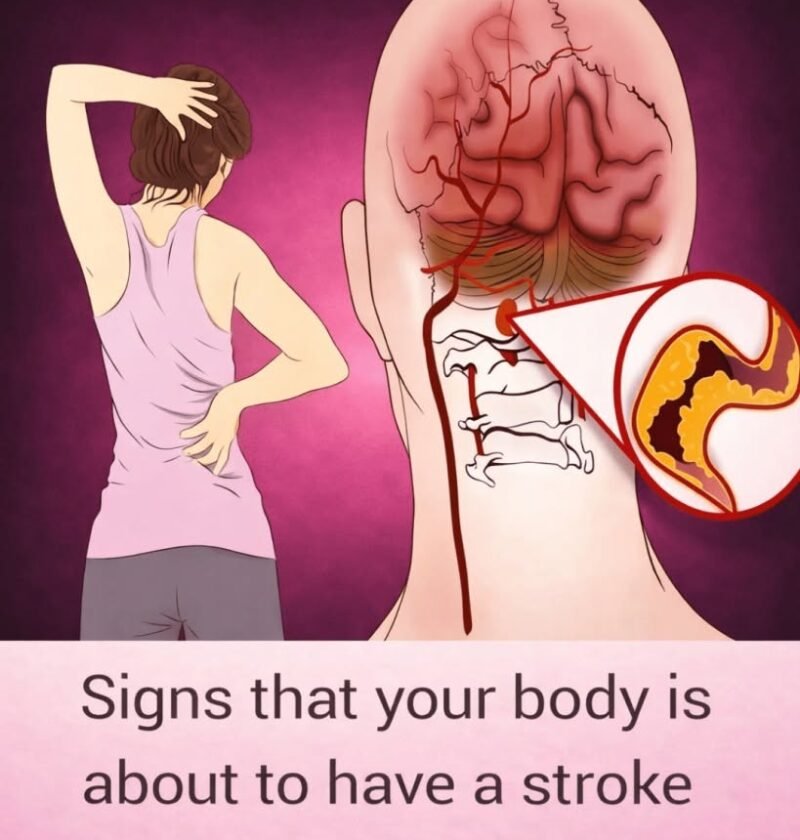
10 Early Warning Signs of a Stroke Everyone Should Know
A key point: most strokes don’t provide a reliable warning days or weeks beforehand. The important signs usually appear suddenly. A TIA (“mini-stroke”) can cause similar symptoms that disappear, but it is still a medical emergency. CDC+1
🚨 10 signs to recognize
- Sudden weakness or numbness — especially in the face, arm, or leg on one side.
- One-sided facial drooping — an uneven smile or numbness on one side.
- Sudden speech problems — slurred speech or difficulty getting words out.
- Sudden trouble understanding — difficulty understanding what someone is saying.
- Sudden vision changes — blurred, double, or lost vision in one or both eyes.
- Sudden loss of balance or coordination — dizziness, stumbling, or difficulty walking.
- Sudden severe headache — particularly a severe headache with no known cause.
- Sudden confusion — an unexplained change in awareness or ability to think clearly.
- Sudden difficulty performing familiar movements — such as coordinating an arm or walking normally.
- Symptoms that disappear after minutes — this can be a TIA, which requires urgent medical evaluation even though the symptoms have resolved. www.stroke.org+1
Remember B.E. F.A.S.T.
- B — Balance: sudden loss of balance or coordination
- E — Eyes: sudden vision changes
- F — Face: one side droops
- A — Arm: weakness or numbness
- S — Speech: slurred or difficult speech
- T — Time: call emergency services immediately CDC+1
⏱️ Don’t wait for symptoms to improve
If even one of these symptoms appears suddenly, call your local emergency service immediately and note the time the symptoms started. Don’t drive yourself to the hospital. Fast treatment can reduce brain damage and disability. CDC+1
And if the symptoms go away, don’t assume everything is fine—a TIA can be an important warning of a future stroke and still requires urgent assessment. CDC
Bottom line: Don’t rely on viral claims about a predictable “one month before a stroke” warning period. Learn B.E. F.A.S.T. and act immediately when sudden neurological symptoms occur.
Sources