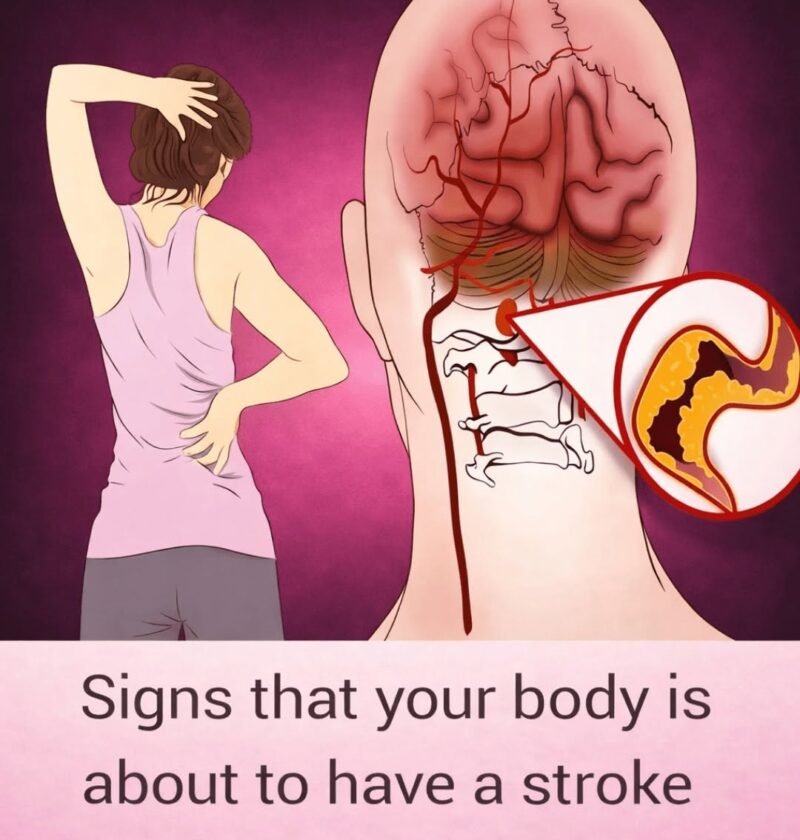
10 Early Warning Signs of a Stroke Everyone Should Know
A stroke can happen suddenly, and fast treatment can save brain tissue and reduce disability. It’s important to recognize the signs rather than waiting for symptoms to become severe.
1. Sudden weakness or numbness
A sudden loss of strength or sensation in the face, arm, or leg, especially on one side of the body, is a classic warning sign.
2. Facial drooping
Ask the person to smile. If one side of the face droops or feels numb, treat it as an emergency.
3. Trouble speaking
Speech may suddenly become slurred, difficult to understand, or the person may struggle to find or form words.
4. Difficulty understanding speech
Someone having a stroke may suddenly seem confused or unable to understand what others are saying.
5. Sudden vision problems
Blurred, double, or lost vision in one or both eyes can occur during a stroke.
6. Sudden dizziness or loss of balance
A stroke can cause sudden difficulty walking, severe dizziness, loss of coordination, or problems maintaining balance.
7. Sudden severe headache
A sudden, unusually severe headache—especially one without an obvious cause—can be a sign of a stroke, particularly a hemorrhagic stroke.
8. Sudden confusion
A person may suddenly become disoriented, confused, or unable to perform a familiar task.
9. Trouble swallowing
Sudden difficulty swallowing can occur with some strokes and may increase the risk of choking.
10. Sudden difficulty with coordination
Unexpected clumsiness or an inability to control an arm, leg, or other movements can be a neurological warning sign.
🚨 Remember BE FAST
B — Balance: Sudden loss of balance or coordination
E — Eyes: Sudden vision changes
F — Face: Facial drooping
A — Arms: Arm weakness or numbness
S — Speech: Speech difficulty or confusion
T — Time: Call emergency medical services immediately
Importantly, stroke symptoms usually appear suddenly. Don’t wait for all 10 symptoms to occur, and don’t wait to see whether they go away. Even symptoms that disappear may represent a transient ischemic attack (TIA) and require urgent medical assessment.
If symptoms are happening right now, note the time they began (or the last time the person was known to be well) and seek emergency medical care immediately.