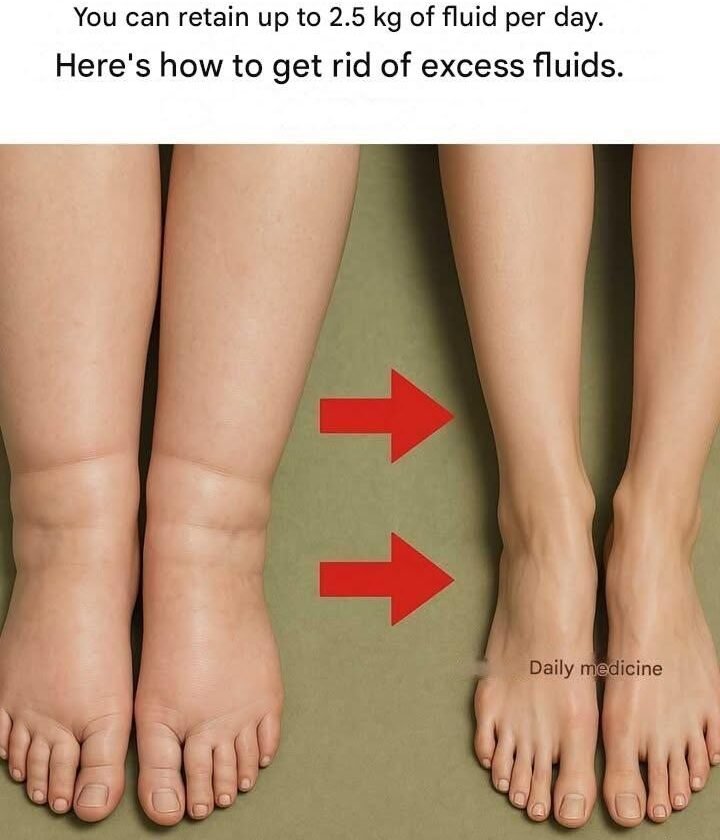
If you’re referring to the claim “You can retain up to 2.5 kg of fluid per day—here’s how to get rid of it,” there’s an important distinction: rapid changes on the scale can be water weight, but trying to force your body to lose several kilograms of fluid is not safe.
Why you might retain water
Temporary fluid retention can happen after:
- Eating a very salty or carbohydrate-heavy meal
- Sitting or standing for long periods
- Hot weather
- Hormonal changes
- Certain medications
But significant or persistent swelling (edema) can also be related to heart, kidney, liver, or vein problems and shouldn’t simply be treated by trying to “flush out” water.
Safer ways to reduce mild fluid retention
- Reduce excess salt, particularly processed and packaged foods.
- Stay normally hydrated rather than drastically restricting water.
- Move regularly; walking helps circulation and can reduce swelling from prolonged sitting.
- Elevate swollen legs when appropriate.
- If you have been prescribed compression stockings, use them as directed.
- Don’t take water pills/diuretics simply to lose weight or water unless a clinician has recommended them.
🚨 Don’t try to rapidly “dehydrate”
Excessive sweating, fasting, severely restricting fluids, or taking diuretics without medical supervision can cause dehydration and dangerous electrolyte abnormalities.
If swelling is new, severe, persistent, or mainly affects one leg, it deserves medical evaluation. Sudden leg swelling with chest pain or shortness of breath is an emergency.
If you tell me where the swelling is (feet, ankles, legs, hands, or abdomen), how quickly it appeared, and whether it affects one or both sides, I can help you work out what might be causing it.