What does ear hair say about your health?
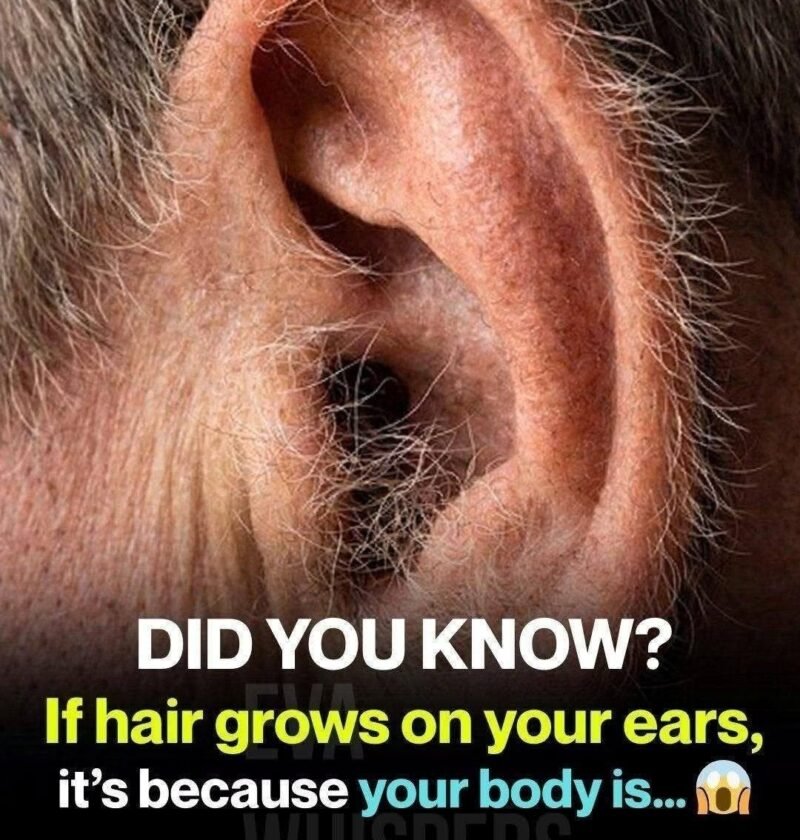
Ear hair is usually a normal part of aging, especially in men, and by itself doesn’t tell you that something is wrong with your health.
A few points are worth knowing:
More ear hair with age: Hair follicles can become more active or more noticeable as we get older. Genetics and hormones also play a role.
It isn’t a reliable heart-disease test: You may see claims that hairy ears mean clogged arteries or an increased risk of heart disease. Some older observational studies reported an association between earlobe creases/ear hair and coronary disease, but that doesn’t establish that ear hair causes heart disease or can diagnose it.
Hormones can affect hair growth: Significant changes in body hair can sometimes be related to hormonal changes or medications, but isolated ear hair is generally not concerning.
It doesn’t indicate “toxins”: There is no good evidence that ear hair means your body is accumulating toxins or that removing it improves your health.
Should you remove it?
If it’s bothersome cosmetically, you can carefully trim visible outer-ear hair with an appropriate electric trimmer or small grooming scissors. Don’t insert scissors, tweezers, or other objects deeply into the ear canal, because you can injure the skin or eardrum.
When should you pay attention?
If you notice a sudden, dramatic change in hair growth along with other symptoms—such as unexplained weight changes, severe acne, unusual facial/body hair, or other hormonal changes—talk with a healthcare professional.
Bottom line: Ear hair is usually just hair. It may become more noticeable with age, but it cannot reliably tell you whether your heart, liver, or other organs are healthy or unhealthy.