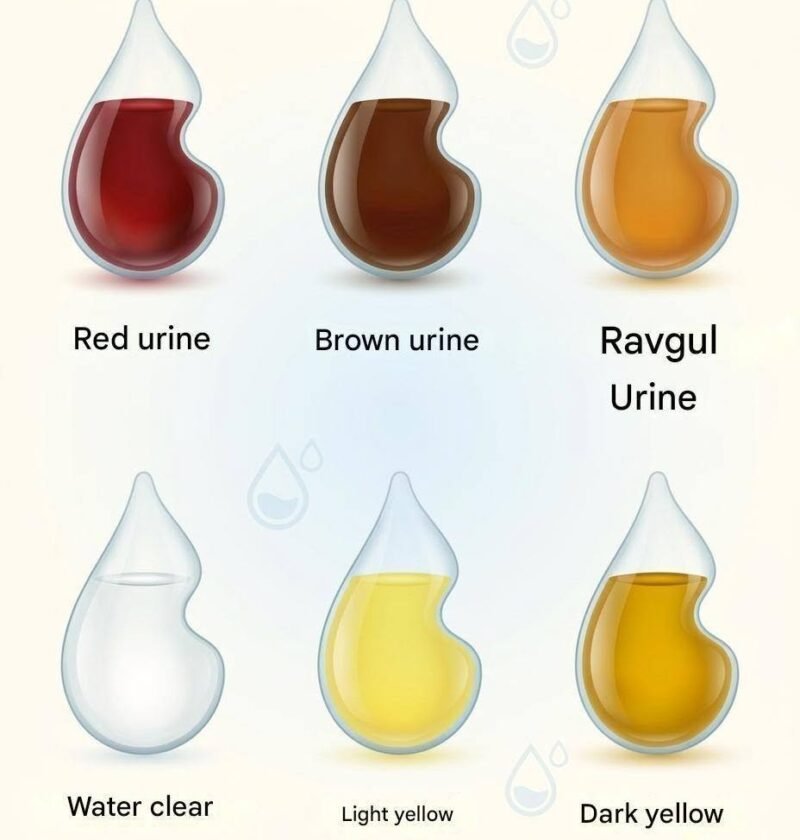
Urine color can provide clues, especially about hydration, but it can’t diagnose a health condition by itself. Medicines, vitamins, foods, and some diseases can also change urine color.
M
MedlinePlus
+1
What different colors can mean
Pale yellow: Usually consistent with good hydration.
Dark yellow or amber: Often suggests you need more fluids, particularly if you’re also thirsty or urinating less.
M
MedlinePlus
Completely clear: Often simply means you’ve consumed plenty of fluid; consistently excessive thirst and very frequent urination, however, deserve medical attention.
Bright/neon yellow: Frequently caused by vitamins, especially riboflavin (vitamin B2), rather than illness.
M
MedlinePlus
Pink or red: Can come from foods such as beets, but it can also indicate blood in the urine. Visible blood should be medically evaluated.
M
MedlinePlus
Brown or very dark: Can occur with significant dehydration, but may also be associated with liver or other medical problems—particularly if accompanied by yellowing of the eyes/skin or pale stools.
M
MedlinePlus
Cloudy: Sometimes occurs with urinary infections or other urinary-tract conditions, especially when accompanied by burning, urgency, frequency, fever, or pain.
M
MedlinePlus
Blue, green, or unusual colors: These can occasionally result from medications, dyes, or certain medical conditions. A persistent unexplained color change should be checked.
🚨 When to get checked
Don’t rely on urine color alone. Blood/red urine, persistent brown urine, markedly reduced urine output, or unusual urine accompanied by fever, severe pain, vomiting, or difficulty urinating warrants medical attention.
M
MedlinePlus
+1
The simplest takeaway: pale-to-medium yellow urine is generally reassuring for hydration, while consistently dark urine can be a reason to drink more—unless a doctor has given you a fluid restriction.
M
Sources