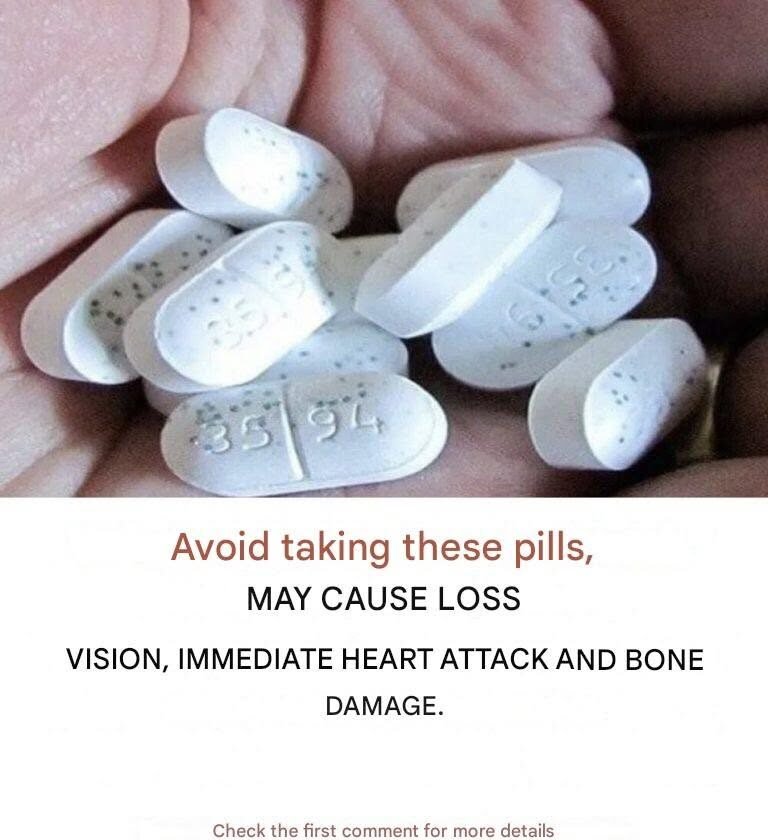
The headline “These tablets can cause blood clots, thrombosis, and heart attacks” is too vague and sensationalized. Some medicines really can increase the risk of blood clots or cardiovascular events, but the risk depends heavily on the specific medication and the person taking it.
Medicines where this can be a genuine concern
- Certain hormonal contraceptive pills containing estrogen can rarely cause blood clots, heart attack, or stroke. Risk is higher with factors such as smoking and older age. (U.S. Food and Drug Administration)
- Some JAK-inhibitor medicines—including tofacitinib, baricitinib, and upadacitinib—carry FDA warnings about increased risks of serious cardiovascular events and blood clots in certain patients. (U.S. Food and Drug Administration)
- Other medications can affect cardiovascular risk in different ways, so you cannot identify the danger simply from the fact that a medicine comes as a tablet.
🚨 Know the warning signs
A possible blood clot in a leg can cause new swelling, pain/tenderness, warmth, or redness/discoloration, particularly on one side. A clot that travels to the lungs can cause sudden shortness of breath or chest pain. (U.S. Food and Drug Administration)
Possible heart attack symptoms include persistent chest pressure/pain, shortness of breath, sweating, nausea, or pain spreading to the arm, back, neck, or jaw. These symptoms require emergency medical attention. (U.S. Food and Drug Administration)
Don’t stop a prescribed medicine just because you saw this headline. If you give me the name of the tablet(s) mentioned in the article, I can tell you exactly what the evidence says about blood clots and heart-attack risk for each one.