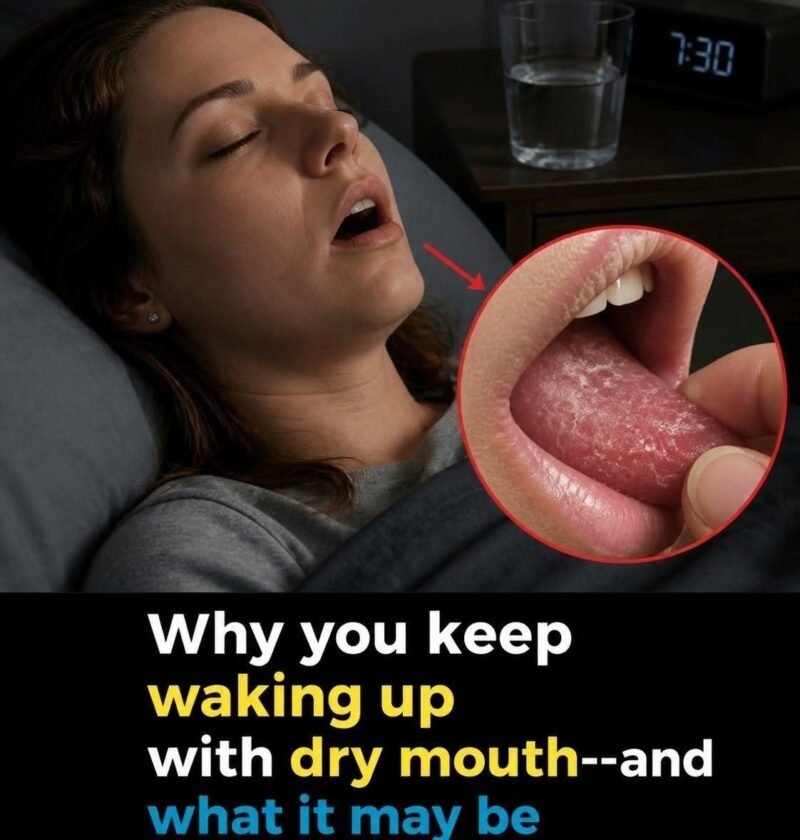
Waking Up With a Dry Mouth? Here’s What Your Body Might Be Telling You
Occasional dry mouth in the morning is common and doesn’t necessarily mean something is wrong. During sleep, saliva production naturally decreases, and breathing through your mouth can make the dryness much more noticeable.
Common reasons
-
Mouth breathing or a blocked nose — allergies, congestion, or sleeping with your mouth open can dry the mouth.
-
Not drinking enough fluids — dehydration can contribute to morning dryness.
-
Snoring or sleep apnea — persistent mouth breathing at night is common in people who snore or have obstructive sleep apnea.
-
Medications — many medicines can reduce saliva production, including some antihistamines, antidepressants, blood-pressure medicines, and decongestants.
-
Alcohol or tobacco — both can contribute to dry mouth.
-
Medical conditions — diabetes and some autoimmune conditions can cause persistent dry mouth.
What you can try
Drink enough water during the day, address nasal congestion, avoid tobacco, and limit alcohol. Sugar-free gum or lozenges can stimulate saliva production.
Don’t deliberately drink large amounts of water right before bed, since this may simply cause repeated nighttime urination.
When should you get checked?
Talk with a healthcare professional or dentist if dry mouth is persistent, especially if you also have excessive thirst or urination, difficulty swallowing, mouth sores, tooth decay, or persistent bad breath.
If you snore loudly, wake up choking or gasping, have morning headaches, or feel excessively sleepy during the day, ask about sleep apnea.
Persistent dry mouth isn’t something you have to simply “live with”—the underlying cause can often be identified and treated.