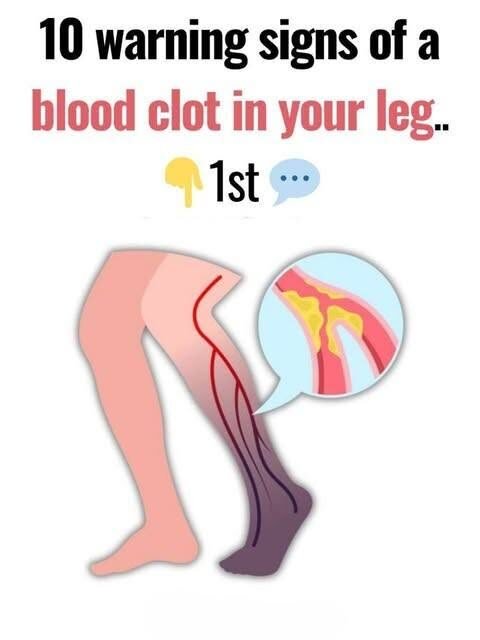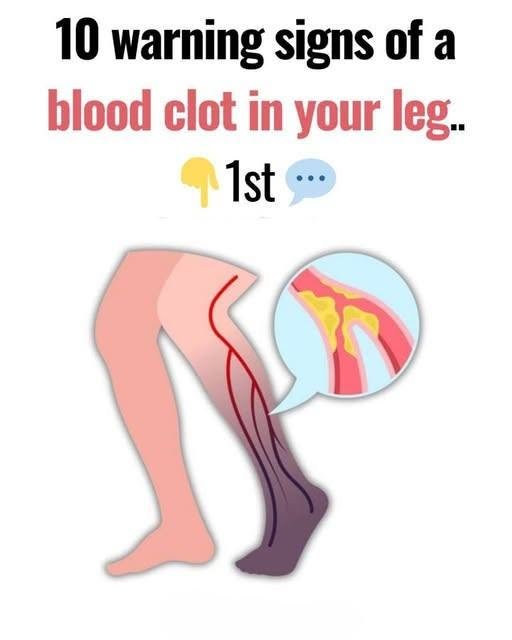
10 Warning Signs of a Blood Clot in the Leg You Should Know 🦵
A deep vein thrombosis (DVT) is a blood clot in a deep vein, usually in the leg. It can become dangerous if part of the clot travels to the lungs, causing a pulmonary embolism. Importantly, about half of DVTs cause no symptoms, so the absence of symptoms doesn’t completely rule one out. CDC+1
Possible warning signs include:
-
Swelling in one leg, particularly if it develops without an obvious injury.
-
Pain or tenderness in the calf or thigh.
-
Throbbing or cramping pain, often affecting one leg.
-
Warmth over an area of the leg.
-
Red or darker-than-usual skin around the painful area.
-
Swollen or more prominent veins, sometimes with tenderness.
-
A feeling of heaviness or tightness in the affected leg.
-
Pain that isn’t explained by an injury and doesn’t settle normally.
-
Symptoms predominantly affecting one side rather than both legs.
-
A combination of swelling, pain, warmth, and discoloration—this combination is particularly concerning for DVT. CDC+1
🚨 The most important warning
If you have possible DVT symptoms plus sudden shortness of breath, chest pain (especially pain that worsens with breathing), coughing up blood, a rapid/irregular heartbeat, severe lightheadedness, or fainting, seek emergency medical attention immediately. These can indicate a pulmonary embolism. CDC+1
DVT symptoms can resemble muscle injuries, infections, and other conditions, so you cannot diagnose a clot by symptoms alone. Medical testing, often including an ultrasound, may be needed. CDC
Risk is higher with factors such as recent surgery or hospitalization, prolonged immobility or long-distance travel, previous blood clots, cancer, pregnancy/postpartum, estrogen-containing medicines, older age, obesity, and certain inherited clotting disorders. CDC+1