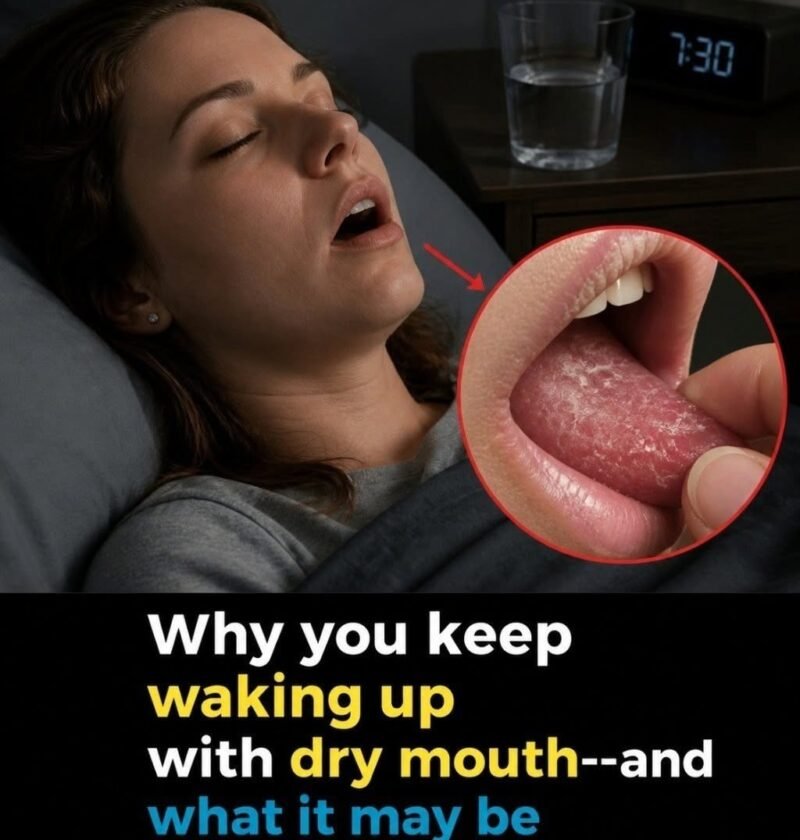
The headline “Waking up with dry mouth? Here’s what your body might be telling you” is partly useful but can be misleading. A dry mouth in the morning is common and usually isn’t a sign of a serious disease. Often, it’s simply caused by reduced saliva production during sleep or breathing through your mouth. (nhs.uk)
Common reasons you wake up with a dry mouth
- 😴 Mouth breathing: A blocked nose, sleeping with your mouth open, or snoring can dry the mouth.
- 💧 Dehydration: Not drinking enough fluids, sweating, alcohol, or excessive caffeine can contribute.
- 💊 Medications: Many medicines can cause dry mouth, including some antihistamines, antidepressants, diuretics and other drugs.
- 😮💨 Sleep apnea: Morning dry mouth can occur alongside loud snoring, pauses in breathing, gasping, morning headaches, or daytime sleepiness. (Mayo Clinic)
- 🩺 Certain medical conditions: Persistent dry mouth can sometimes be associated with diabetes or autoimmune conditions such as Sjögren syndrome. (nhs.uk)
What you can try
- Drink water regularly during the day and keep some beside your bed.
- Try to breathe through your nose rather than your mouth.
- Treat nasal congestion if that’s causing nighttime mouth breathing.
- Limit alcohol and excessive caffeine.
- Chew sugar-free gum during the day to stimulate saliva.
- Maintain good dental hygiene because chronic dry mouth increases the risk of tooth decay. (nhs.uk)
Don’t stop a prescribed medicine on your own even if you suspect it’s causing the dryness; ask your doctor or pharmacist about alternatives. (nhs.uk)
When should you get checked?
If dry mouth persists for several weeks, makes eating or swallowing difficult, or occurs with frequent urination/excessive thirst, dry eyes, painful or bleeding mouth, or persistent white patches, it’s worth speaking with a healthcare professional. (nhs.uk)
Bottom line: Morning dry mouth most often points to mouth breathing, dehydration, medication effects, or normal overnight reduction in saliva—not a hidden illness. But if you also snore loudly, gasp or choke during sleep, or are very sleepy during the day, ask about possible sleep apnea. (Mayo Clinic)