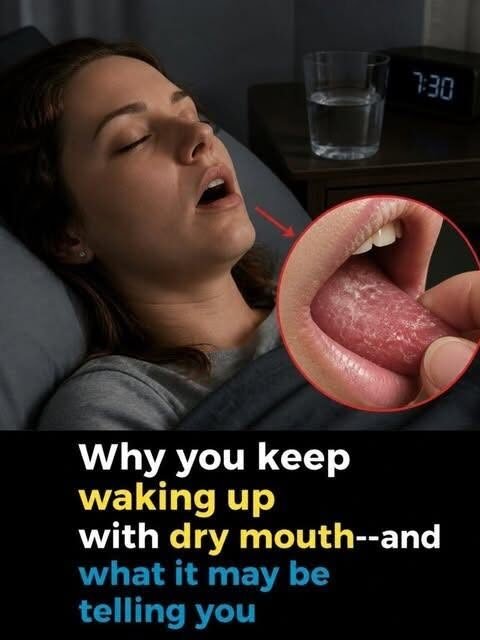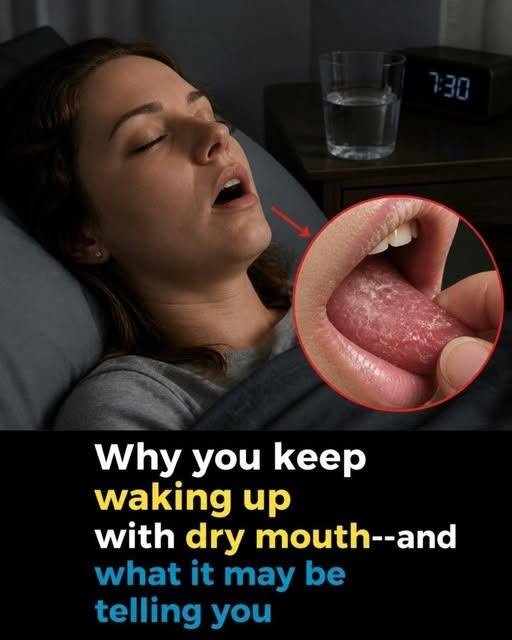
Waking up with a dry mouth is common, but it can sometimes be your body’s
way of signaling something worth paying attention to.
Common reasons
- Mouth breathing: A blocked nose, allergies, or sleeping with your mouth open can dry out your mouth overnight.
- Dehydration: Not drinking enough fluids during the day—or losing fluid through sweating—can contribute.
- Medications: Many medicines, including some antihistamines, antidepressants, and blood-pressure medications, can reduce saliva production.
- Snoring or sleep apnea: Persistent snoring, gasping during sleep, morning headaches, or significant daytime sleepiness alongside dry mouth may warrant evaluation for sleep apnea.
- Alcohol, tobacco, or caffeine: These can contribute to dryness, especially when used later in the day.
- Dry bedroom air: Air conditioning or low humidity can make morning dryness worse.
- Medical conditions: Persistent dry mouth can occasionally be associated with conditions such as diabetes or disorders affecting saliva production.
What you can try
Keep water beside your bed, stay adequately hydrated during the day, address nasal congestion, and consider a humidifier if your bedroom air is very dry. Avoid tobacco and excessive alcohol, and maintain good oral hygiene because reduced saliva increases the risk of cavities and oral infections.
If your dry mouth is persistent, severe, or accompanied by excessive thirst/urination, difficulty swallowing, mouth sores, or symptoms suggestive of sleep apnea, it’s a good idea to speak with a healthcare professional or dentist.