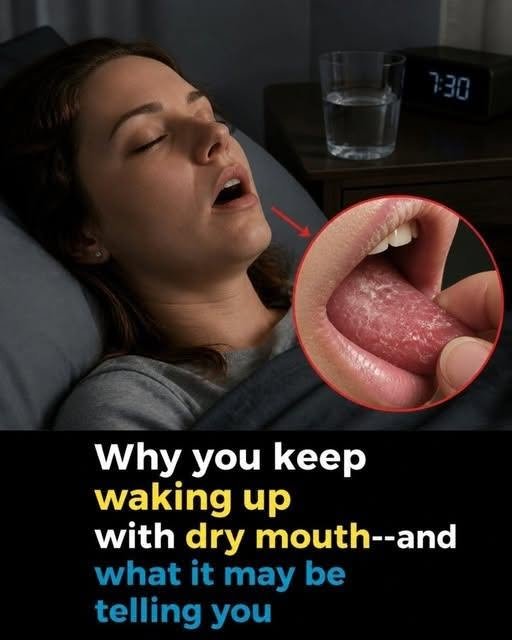
Waking Up With Dry Mouth? Here’s What Your Body Might Be Telling You
Occasionally waking with a dry mouth is common. Saliva production naturally decreases during sleep, but persistent or severe morning dryness can sometimes point to an underlying issue. Mayo Clinic+1
Common reasons
- Mouth breathing or snoring: A blocked nose, sleeping with your mouth open, or habitual mouth breathing can dry the mouth overnight. nhs.uk
- Dehydration: Not drinking enough fluids, heavy sweating, or illness can contribute. nhs.uk
- Medications: Hundreds of medications can cause dry mouth, including some used for depression, allergies, blood pressure, anxiety, and pain. Mayo Clinic
- Sleep apnea: Waking with a dry mouth is a recognized symptom, particularly when accompanied by loud snoring, gasping/choking during sleep, morning headaches, or excessive daytime sleepiness. Mayo Clinic
- Diabetes: Persistent dry mouth can occur with diabetes, particularly when accompanied by increased thirst and frequent urination. Mayo Clinic
- Sjögren’s disease: Consider this possibility when dry mouth occurs together with persistent dry eyes, fatigue, or joint symptoms. nhs.uk
What you can try
Drink water regularly during the day, keep water beside your bed, chew sugar-free gum to stimulate saliva, and avoid excessive alcohol and caffeine. Good oral hygiene is particularly important because reduced saliva increases the risk of tooth decay and gum problems. nhs.uk+1
Don’t stop a prescribed medication on your own even if you suspect it’s causing the dryness. Ask your doctor or pharmacist whether an alternative or dose adjustment is appropriate. nhs.uk
When to get checked
If dry mouth persists for several weeks, makes eating or speaking difficult, causes mouth pain or sores, or occurs along with frequent urination, dry eyes, significant snoring, or daytime sleepiness, arrange a medical or dental evaluation. nhs.uk
Bottom line: Morning dry mouth is often caused by something simple like mouth breathing or dehydration, but persistent symptoms can occasionally be a clue to medication effects, diabetes, Sjögren’s disease, or sleep apnea.
Sources