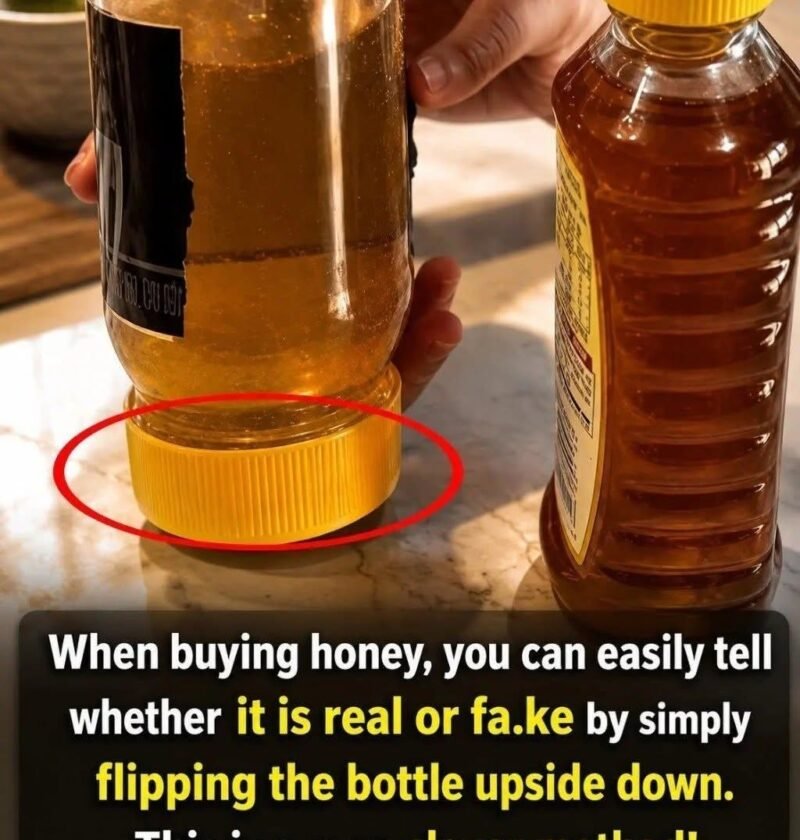
Most popular “kitchen tests” for pure honey—like the water glass test, thumb test, or matchstick test—are unreliable myths. Modern adulterated honey is made with sophisticated sugar syrups (like high-fructose corn syrup, rice syrup, or beet syrup) engineered to mimic the exact thickness, moisture content, and behavior of real honey.
To tell whether you are actually buying pure honey, rely on packaging clues, physical changes over time, and certified testing rather than viral home tricks.
1. Why Popular Home Tests Fail
-
The Water Test (dropping honey in water): Pure honey can dissolve if stirred or if it naturally has a higher moisture content (like clover or acacia honey), while thick syrup blends can sink in a lump.
-
The Thumb Test (seeing if a drop spreads): Viscosity depends on temperature and floral source, not purity. Real warm honey runs; cold corn syrup stays put.
-
The Flame / Matchstick Test: Honey is roughly 17%–20% water, so even 100% pure honey can prevent a match from lighting if it coats the tip.
2. Reliable Ways to Spot Real Honey
| What to Check | Real, Pure Honey | Likely Adulterated / Ultra-Processed |
| Ingredient Label | Lists one single ingredient (e.g., “100% Pure Raw Honey”) with no added syrups or flavorings. | Lists “honey blend,” glucose syrup, fructose, maltose, or corn/rice syrup. |
| Crystallization Over Time | Gradually turns thick, cloudy, and grainy (especially in cool weather). Natural glucose separates from water—a strong sign of real, unheated honey. | Stays completely clear and runny indefinitely on the shelf, even in winter. |
| Origin & Floral Source | Names a specific floral variety (e.g., Sidr, Acacia, Clover, Wildflower, Manuka) and a specific region or beekeeper. | Vague sourcing (“Product of multiple countries”) with generic branding and unusually cheap pricing. |
| Aroma & Flavor Depth | Smells floral, earthy, or herbaceous; flavor evolves on the palate with a slight warm throat tingle. | Smells like plain melted sugar or caramel with a flat, one-note sweetness. |
| Quality Certifications | Carries independent lab testing or quality seals (such as True Source Certified, UMF/MGO for Manuka, or local food authority lab marks). | Relies purely on buzzwords like “Farm Fresh” or “Natural” with no traceability. |
Pro Tip for Buying
Buy raw, unfiltered honey directly from local beekeepers or reputable regional producers whenever possible. If your honey crystallizes in the jar, do not throw it away—simply place the glass jar in a bowl of warm (not boiling) water for 10–15 minutes to return it to a smooth liquid without destroying its natural enzymes.