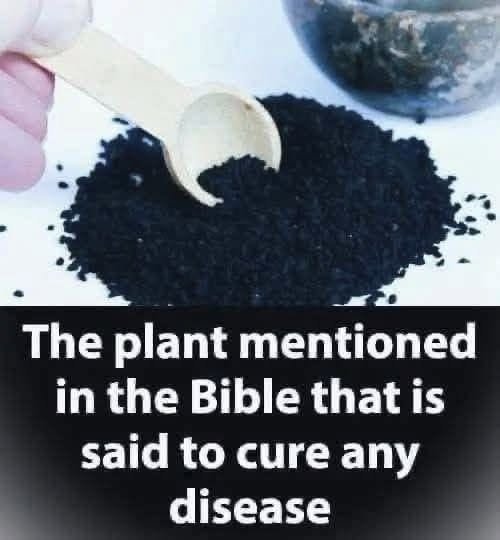
If you’re referring to the popular claim about a plant mentioned in holy books that “cures every disease,” it is most likely black seed (Nigella sativa), also called black cumin or kalonji.
In Islamic tradition, a hadith in Sahih al-Bukhari and Sahih Muslim says that black seed is a remedy for diseases, with an exception concerning death. However, this shouldn’t be interpreted as scientific evidence that black seed cures every disease.
🌿 What does science say?
Black seed contains compounds such as thymoquinone and has been studied for antioxidant, anti-inflammatory, blood-pressure, blood-sugar, and other potential effects. But the human evidence is not strong enough to conclude that it cures cancer, diabetes, infections, autoimmune diseases, or other serious illnesses.
It can also interact with medicines, particularly drugs affecting blood sugar, blood pressure, or blood clotting.
So if you are considering black seed as a supplement, especially if you take prescription medicines, it’s sensible to discuss it with your doctor or pharmacist.
Bottom line: The plant commonly associated with the “cure for every disease” claim is black seed, but the traditional statement and modern medical evidence are two different things. Black seed should not replace proven treatment for a serious illness.