🦶 Uric Acid Crystals: Why They Can Cause Sudden, Intense Pain
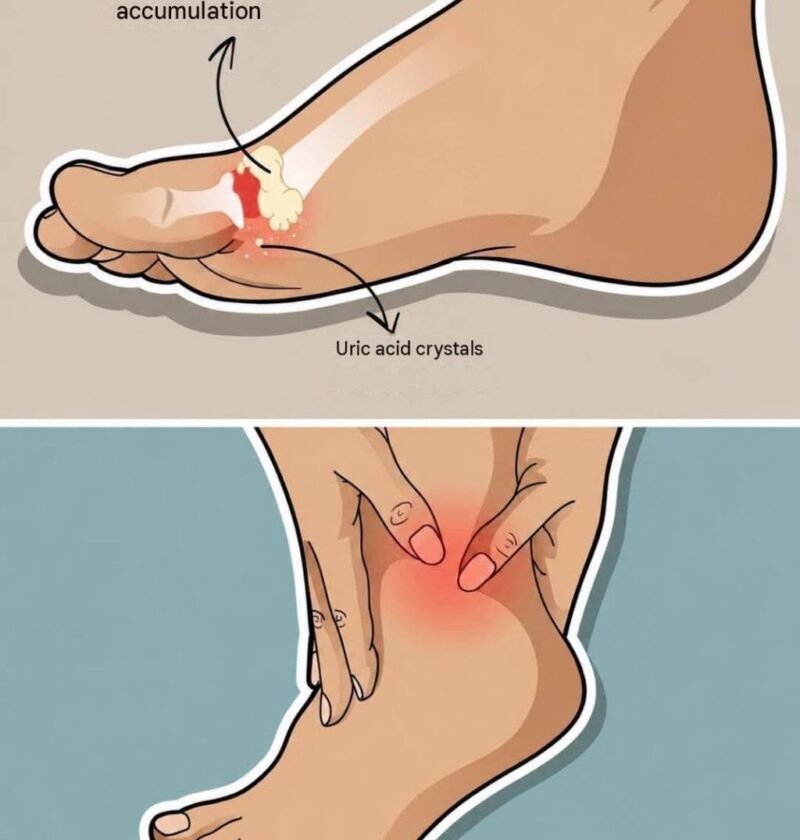
It sounds like you’re referring to gout. When uric acid levels remain high, monosodium urate crystals can accumulate in and around a joint. The immune system can react strongly to these crystals, causing sudden inflammation.
Typical gout symptoms
A gout attack can develop surprisingly quickly, often causing:
Severe joint pain, sometimes beginning during the night
Swelling and warmth around the joint
Red or shiny-looking skin
Significant tenderness—sometimes even light touch is painful
Most commonly, the big toe, although ankles, knees, feet, wrists, and other joints can also be affected
Why does it happen?
Uric acid is produced when the body breaks down purines. Normally, the kidneys remove uric acid through urine. If the body produces too much or the kidneys don’t remove enough, uric acid can accumulate and eventually form crystals.
Risk can be influenced by genetics, kidney function, certain medications, alcohol intake, obesity, and dietary patterns.
If you think you’re having gout
A first episode of sudden, intensely painful joint swelling should be medically evaluated, because infections and other inflammatory conditions can look similar.
Treatment can reduce inflammation during an attack, while longer-term treatment may be appropriate for people with recurrent gout or persistently high uric acid.
Don’t try to dissolve an acute gout attack with a “natural remedy.” Drinking enough water and following a balanced diet can support overall health, but they don’t reliably treat an active attack.
If you tell me which joint is painful, whether it’s swollen/red, and whether this is your first attack, I can explain what possibilities to consider.