Small White Spots on Your Arms and Legs: What You Should Know
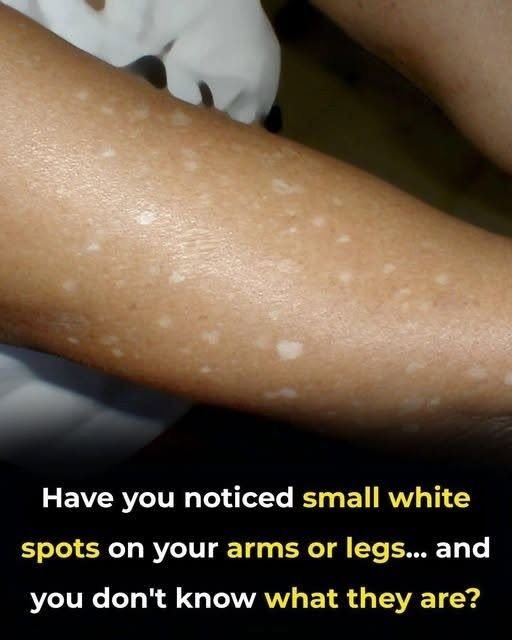
If you’ve noticed tiny, flat white spots on your forearms or lower legs, particularly as you’ve gotten older, one common explanation is idiopathic guttate hypomelanosis (IGH). It is a benign pigment condition that becomes increasingly common with age and is often associated with cumulative sun exposure.
C
Cleveland Clinic
+1
What do these spots usually look like?
Small, usually a few millimeters across
White or noticeably lighter than surrounding skin
Round, oval, or slightly irregular
Usually smooth and neither painful nor itchy
Often numerous on the forearms and shins
More noticeable on sun-exposed skin
C
Cleveland Clinic
+1
IGH isn’t considered dangerous and generally doesn’t require treatment.
C
Cleveland Clinic
But don’t automatically assume every white spot is IGH
Other conditions can produce pale or white patches, including vitiligo and certain fungal or inflammatory skin conditions. A healthcare professional can usually distinguish them by examining the skin.
D
DermNet
+1
What can you do?
Protect the skin from the sun. Regular sun protection can help prevent additional sun damage, although it won’t necessarily make existing IGH spots disappear.
D
DermNet
+1
Avoid trying to remove the spots with lemon juice, vinegar, bleach, harsh scrubs, or other DIY treatments. Irritation can create additional skin problems and pigment changes.
If the spots are cosmetically bothersome, a dermatologist can discuss treatment options, although results vary and treatment isn’t medically necessary for typical IGH.
C
Cleveland Clinic
+1
When should you get them checked?
Have new or unusual white spots examined if they’re rapidly changing, spreading significantly, scaly, inflamed, painful, bleeding, or otherwise different from your other spots. A clinician can make sure the appearance isn’t due to another skin condition.
C
Cleveland Clinic
+1
Bottom line: Small, smooth white spots on the arms and legs are often a harmless age- and sun-associated pigment change called idiopathic guttate hypomelanosis—but appearance alone can’t establish the diagnosis.
C
D
Sources