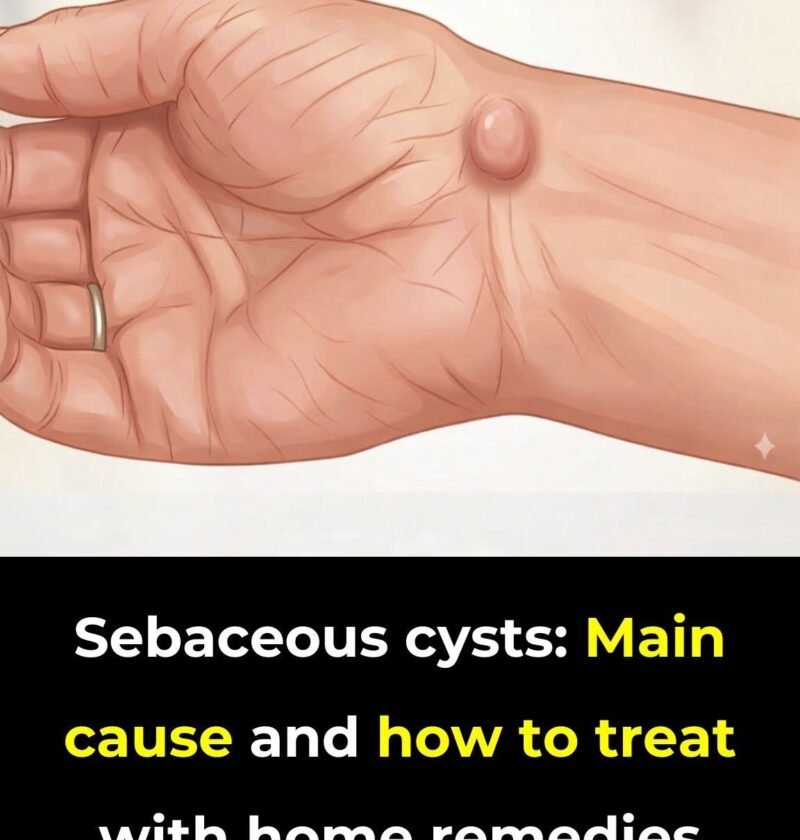
If by “sebaceous cyst” you mean the common skin lump often called a sebaceous cyst, it is usually an epidermoid cyst—a sac under the skin filled with keratin. True sebaceous cysts are less common.
Main causes
A blocked or damaged hair follicle can cause an epidermoid cyst.
Skin trauma can sometimes trigger one.
Some people are simply more prone to developing them.
They commonly occur on the face, neck, chest, back, or groin.
Can you treat one at home?
There isn’t a reliable home remedy that makes an established cyst disappear permanently.
Don’t squeeze, puncture, or try to drain it yourself. This can introduce infection, cause scarring, and leave the cyst wall behind so it can come back.
If it’s mildly irritated, a warm, moist compress for about 10–15 minutes several times a day may provide comfort.
Keep the area clean and avoid friction or repeated touching.
If the cyst is bothersome, repeatedly infected, growing, or cosmetically concerning, a clinician can remove it. Complete removal of the cyst wall is what most reliably prevents recurrence; simply draining it often doesn’t.
Get medical attention promptly if
The lump becomes rapidly larger, very painful, red/hot, starts draining foul-smelling material, or you develop fever. Also have any new or unexplained lump examined rather than assuming it’s a cyst.
And despite many online “cyst-busting” remedies, vinegar, essential oils, toothpaste, or squeezing aren’t proven treatments and can damage the skin.