What Actually Happens When You Sleep on Your Right Side
-
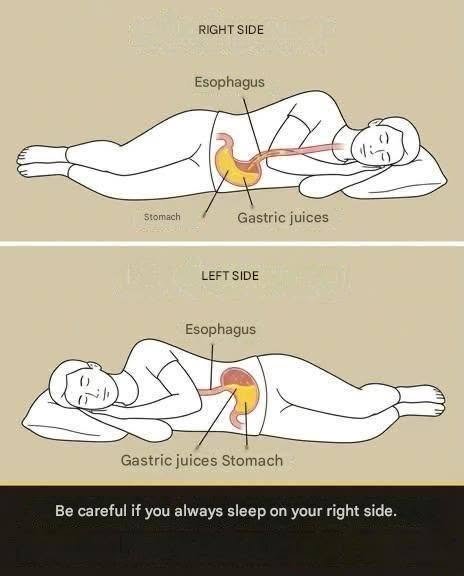
Worse Acid Reflux and Heartburn (The Main Drawback): Your stomach sits slightly to the left of your esophagus, curving downward toward the right. When you lie on your right side, stomach acid pools closer to the lower esophageal sphincter (the muscular valve at the bottom of your food pipe) and gravity no longer helps keep acid down—making nighttime heartburn, sour taste, or reflux cough noticeably more likely.
-
Reduced Blood Flow During Pregnancy: In mid-to-late pregnancy, lying on the right side (or flat on the back) allows the growing uterus to press slightly against the inferior vena cava, the large vein running along the right side of the spine that returns blood from the lower body to the heart. Doctors recommend left-side sleeping during pregnancy to maximize blood flow to the placenta and kidneys.
-
Gentle Relief for Some Heart Conditions (Why Some People Prefer It): People with certain heart rhythm awareness (palpitations) or mild heart failure sometimes feel more comfortable on their right side because the heart rests slightly more supported against the mediastinum rather than pressing against the left chest wall—though neither side harms a healthy heart.
-
Shoulder, Hip, and Facial Pressure: Always sleeping on the exact same side without shifting can irritate the bottom shoulder joint or hip bursa over time, and pressing one cheek into the pillow nightly creates deeper “sleep creases” on that side of the face.
Which Sleeping Side Is Best for Your Body?
-
Left side: Best if you deal with acid reflux (GERD), heartburn, or pregnancy.
-
Right side: Fine—and often more comfortable—if you have no reflux, are not pregnant, or feel uncomfortable heartbeat sensations lying on your left.
-
Either side beats sleeping flat on your back if you snore or have mild sleep apnea, because side-sleeping keeps the tongue and soft palate from falling backward into the airway.