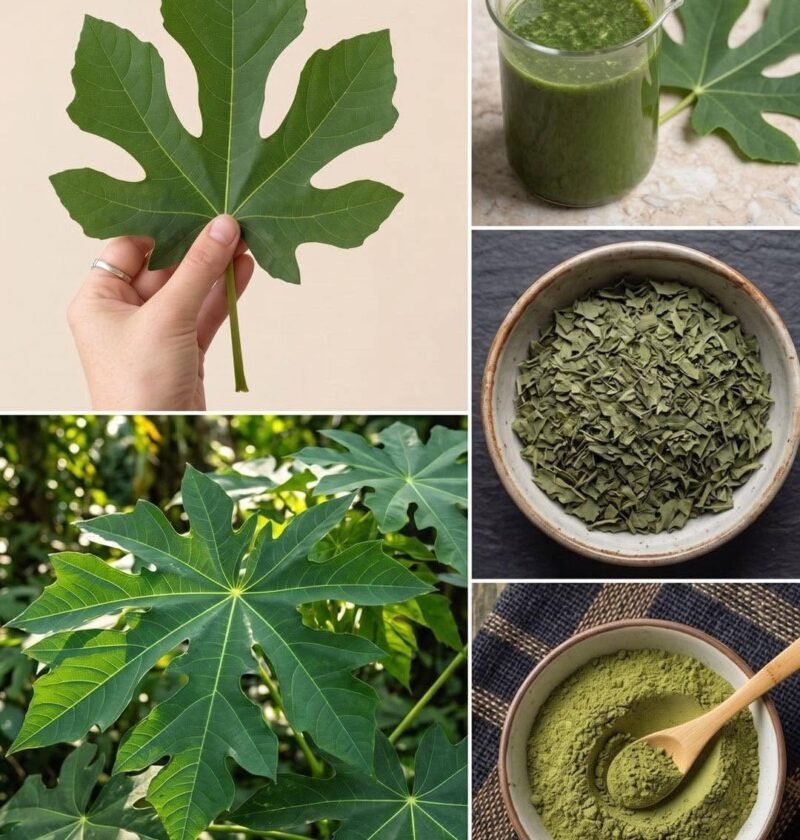
Papaya leaves are often promoted online as a “hidden” natural remedy, especially for dengue, digestion, blood health, and inflammation. Some traditional uses are interesting, but the evidence is much more limited than viral posts often suggest.
🌿 What’s actually known about papaya leaves?
- Traditional medicine: Papaya leaves have been used traditionally in several cultures for digestive complaints, fever, and other ailments.
- Dengue: Small clinical studies have investigated papaya-leaf preparations for increasing platelet counts in people with dengue. Results have been promising in some studies, but this does not establish papaya leaf as a cure for dengue, and it should never replace medical monitoring or treatment.
- Antioxidant compounds: Papaya leaves contain various plant compounds with antioxidant activity, but laboratory findings don’t necessarily translate into proven health benefits in humans.
- Digestive claims: You may see claims that papaya leaves “cleanse the liver,” eliminate parasites, or cure stomach problems. Strong human evidence for these claims is lacking.
- Safety: Concentrated extracts or large amounts may cause side effects and may interact with medications. Pregnant people should be particularly cautious with medicinal preparations.
⚠️ A common misconception
If the claim you’re seeing says that papaya leaves can dramatically increase platelets or cure dengue, be skeptical. Dengue can become dangerous quickly, and a falling or low platelet count requires proper medical assessment rather than relying on a home remedy.
If you share the full article or the specific “how they’ve been used…” claim, I can break down each claim and tell you what is scientifically supported, what is traditional practice, and what is misinformation.